

Overview
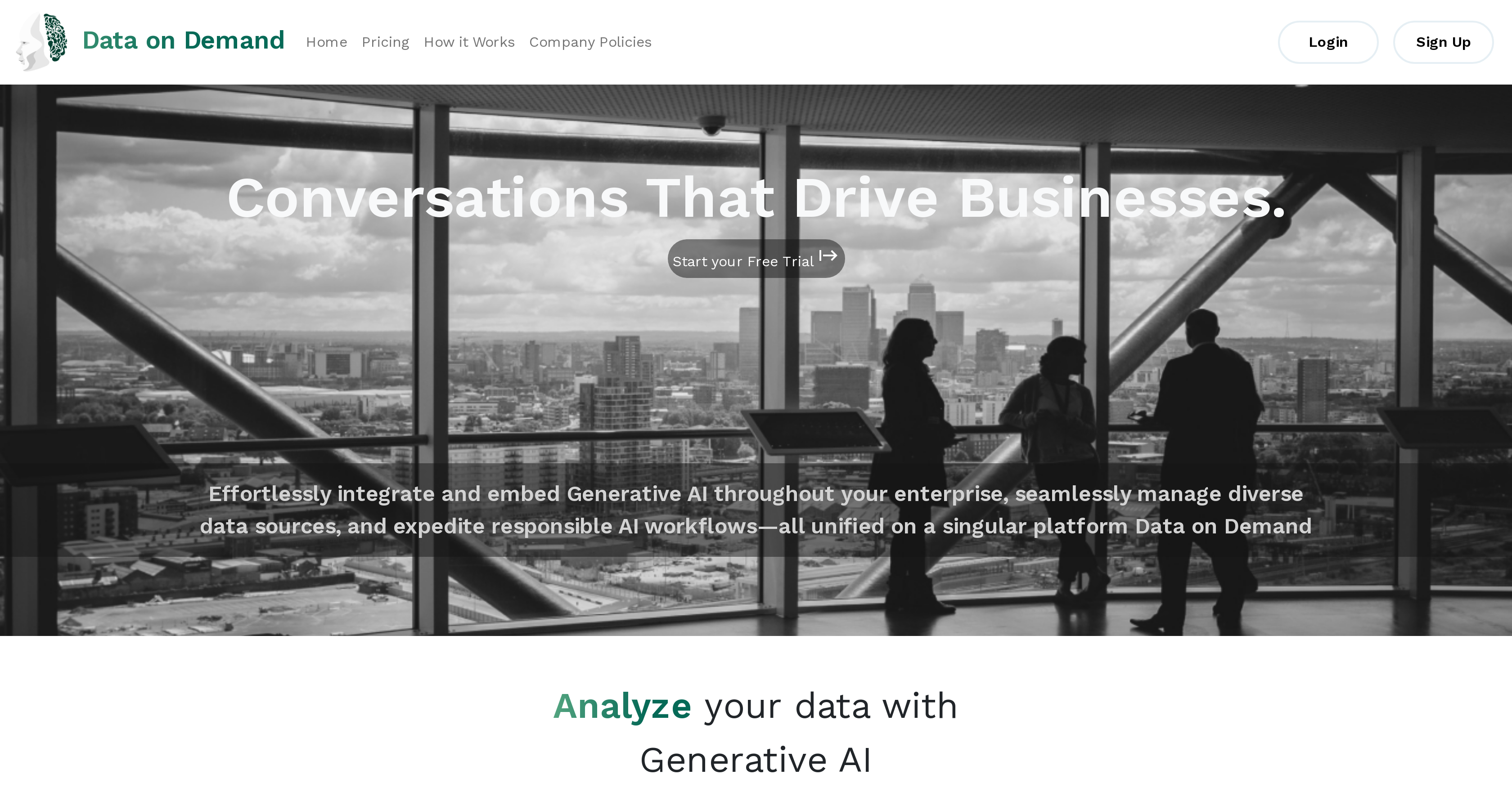
- Make faster business decisions with real-time insights that eliminate waiting for static reports
- Extract valuable insights independently without specialized IT personnel through automated data integration
- Forecast future demand accurately using predictive analytics based on historical sales data and external factors
- Understand complex data instantly through easy-to-digest visual representations like charts and graphs
- Optimize operational efficiency across eCommerce, logistics, and manufacturing sectors with actionable recommendations
- Integrate seamlessly with existing systems without extensive overhaul through efficient workflow integration
Pros & Cons
Pros
- Manages data from diverse sources
- Effortless data extraction
- In-depth pattern analysis
- Trend detection
- Anomaly detection
- Easy-to-understand visual representations
- Actionable insight recommendations
- Real-time insight generation
- Efficient system integration
- Predictive analytics capabilities
- Facilitates independent data interpretation
- Reduces dependence on specialized personnel
- Optimizes operational efficiency
- Suitable for multiple sectors
- Ecommerce, logistics, finance data handling
- Minimizes manual effort
- Boosts decision making speed
- Increases profitability
- Enhances productivity
- Reduces costs
- Reduces IT and analyst dependence
- Dynamic chart and graph generation
- Access to instant insights
- No need for extensive overhauls
- Proactive procurement facilitation
- Prevents inventory excess/shortages
- Enhances production planning
- Minimizes downtime
- Optimizes resource allocation
- Quick financial data access
- Improves accuracy in demand prediction
- User friendly data presentation
- Seamless document interaction
- Streamlines complex research analysis
- Cloud storage integration
- Textual data contextual analysis
- Interactive result presentation
- Instant information retrieval
- Saves valuable time
- Controlled access to sensitive information
- Boosts productivity
- Reduces risk of errors
Cons
- No privacy information available
- Lacks customizability
- No mention of data security
- No API mentioned
- Not user-friendly
- Relies heavily on external data
- No trial period mentioned
- Unclear pricing model
- No offline access
- Integration capabilities not specified
Reviews
Rate this tool
Loading reviews...
❓ Frequently Asked Questions
Data on Demand is a generative AI platform designed to offer actionable business insights. With its ability to integrate and manage different data sources on a unified platform, it aids in facilitating smooth AI workflows. It allows users to efficiently extract pertinent data from diverse sources and presents in-depth analysis of patterns, trends, and anomalies. This intricate dataset is further translated into easily digestible visual depictions such as charts and graphs. Employing predictive analytics, it offers forecasting of future demand based on historical sales data, seasonality, and external aspects. Industries it can serve are eCommerce, Logistics, Finance, Consumer Produced Goods, and Manufacturing.
Data on Demand adeptly manages and integrates data from varied sources through the use of Generative AI which assists users in effortlessly extracting the relevant data. This feature enables smooth AI workflows, unified on a single platform.
Data on Demand carries out comprehensive data analysis detecting patterns, trends, and anomalies within the data. By doing so, it assists you in understanding your data better and deriving actionable insights from it.
Data on Demand translates complex datasets into visually compelling and easy-to-understand representations like charts and graphs. This enables users to better understand and interpret the analyses and insights the AI generates.
Yes, you can. The platform is designed to allow users to independently extract valuable insights, reducing the dependence on specialized personnel. It swiftly extracts relevant data from various sources without requiring any manual effort on the user's part, making this process straightforward and efficient.
Data on Demand leverages its predictive analytics feature to anticipate future demand in a variety of sectors, including eCommerce, Logistics, Finance, Consumer Produced Goods, and Manufacturing. It utilizes historical sales data, seasonality effects, and external factors to make these accurate forecasts.
The real-time insights offered by Data on Demand can significantly enhance your business decision-making process. The platform provides instant, accurate data that enables you to make quick, informed decisions. By reducing the dependence on specialized IT personnel and analysts, it can also enhance productivity within your organization.
No, Data on Demand does not require a complete overhaul of your existing systems. It is built to integrate efficiently with your current workflows, enriching them with its advanced data analytics capabilities without necessitating extensive changes.
Data on Demand doesn't just analyze numbers, but it deciphers the story within them, thereby, providing actionable recommendations. Although specific types of these recommendations have not been detailed, the inclusion of such insights implies that the platform can provide strategies and suggestions intended to improve business operations and decision-making based on the patterns the AI discovers in the data.
In the context of Data on Demand, Generative AI refers to the AI technology which is used for managing diverse data sources. This technology allows the platform to integrate and embed throughout the enterprise, expedite responsible AI workflows, and generate valuable insights from various data sources.
In Data on Demand, data is visualized through comprehensive representations such as charts and graphs. These visually convincing interpretations help in transforming complex datasets into easy-to-understand formats.
Yes, Data on Demand can analyze patterns, trends, and anomalies within large datasets. It conducts in-depth analysis to decipher the underlying story within the data, thereby providing the user with valuable insights.
Data on Demand contributes to faster decision-making by providing real-time insights and actionable recommendations based on its analysis of various data. It eliminates the waiting time for static reports, thus allowing leaders to make quick and effective decisions.
Data on Demand enables users to independently extract valuable insights, which minimizes reliance on specialized IT personnel and analysts. This not only quickens the process but also makes reports accessible faster, thereby simplifying operations and making them smarter and more efficient.
Data on Demand allows users to swiftly extract relevant data from various sources without putting any manual effort. However, the types of data that can be extracted using this platform have not been explicitly mentioned on their website.
Yes, Data on Demand can integrate with your existing system without requiring extensive overhauls. It complements your existing workflows with its efficient analytics solution.
Data on Demand uses predictive analytics to forecast future demand based on historical sales data, seasonality, and external factors. Such accurate forecasts enable proactive procurement, prevent both excess inventory and shortages, and optimize operational efficiency in various sectors.
Yes, there seems to be a free trial offer as it's mentioned on their website's homepage.
Data on Demand can aid in cost reduction by optimizing operational efficiency, improving accuracy in predictions to minimize surplus or shortages, and enhancing production planning. These improvements can lead to a meaningful reduction in costs as per the 40% cost reduction achievement mentioned on their website.
Pricing
Pricing model
Paid
Paid options from
$40/month
Billing frequency
Monthly
Related Videos
Unlocking DoD's Vault: Your Blueprint for Data on Demand Success in 2 mins
Humanli AI•23 views•Jan 15, 2024