

Overview
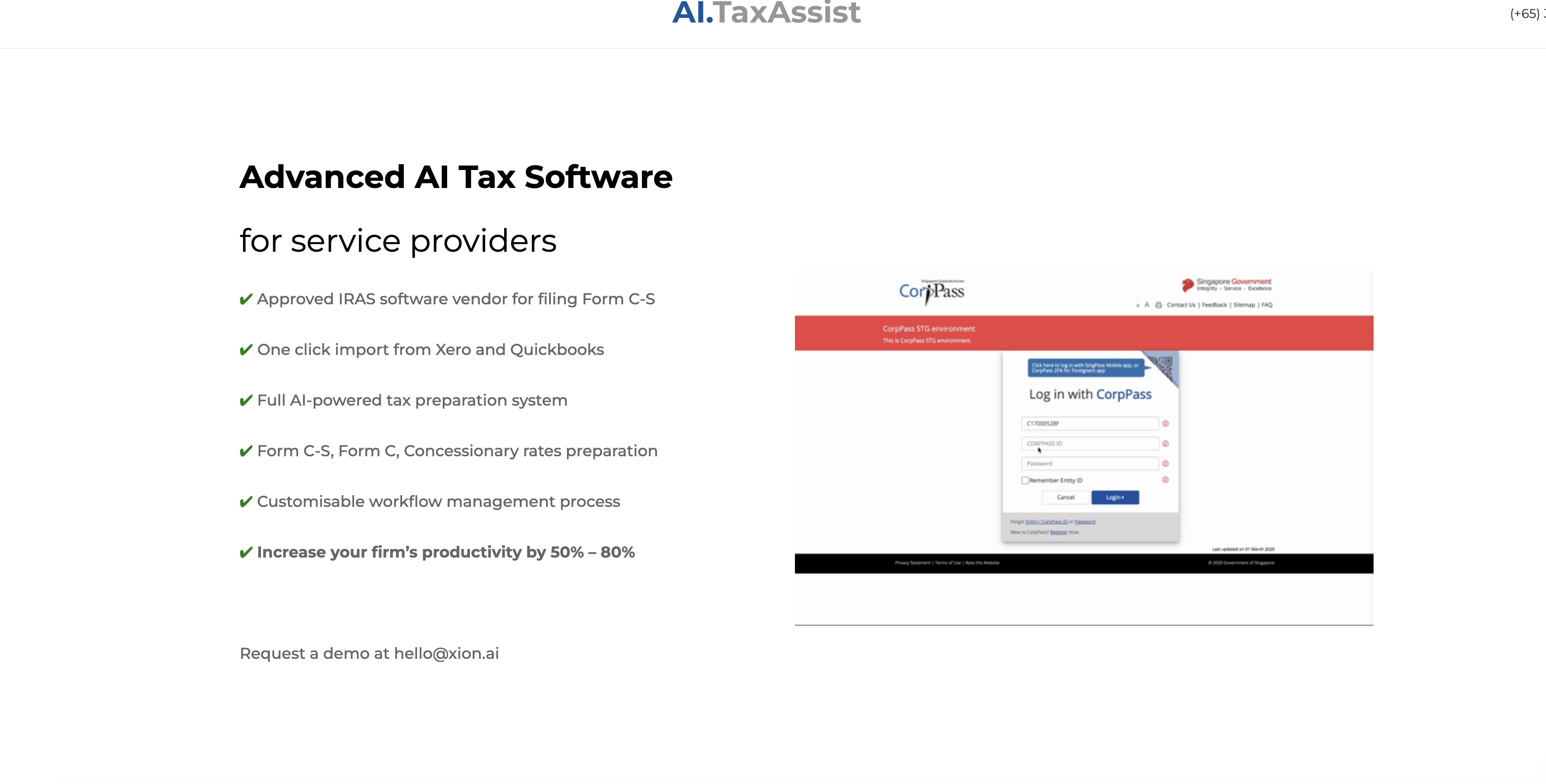
- Eliminate manual data entry errors through automated e-filing with direct IRAS integration for Form C-S and GST
- Import client financial data instantly using one-click integration with Xero and QuickBooks accounting platforms
- Get AI-powered tax classification suggestions that automatically analyze General Ledger data like a junior tax agent
- Scale your tax practice efficiently with flexible pricing including pay-per-assessment plans for small firms
- Maintain complete client communication through an integrated portal and messaging system for clarifications and sign-offs
- Prepare tax returns even with limited data using flexible workflows that work with only PL and Fixed Assets files
- Gain smarter insights over time as the AI identifies patterns in revenue flow, transactions, and expenses with each use
- Customize approval workflows and role management from Admin to Senior Manager for enterprise firms
Pros & Cons
Pros
- Streamlines e-filing
- One-click data import
- Xero and Quickbooks compatible
- Workflow management
- Pattern recognition for data
- Accurate statistical imaging
- Minimizes human error
- Direct IRAS integration
- Pay-per-assessment for small firms
- Multiple roles feature
- Integrated client portals
- Automatic tax classification
- Flexible workflow supports PL and Fixed Assets files
- Integrated messaging system
- Productivity boost by up to 80%
- Fast access to critical business info
- Auto uploads of FAR, GL and MA
- Customisable workflow management
- Seamless Form C-S submission
- Managed upload service
Cons
- Limited to Xero, Quickbooks
- No multi-currency support mentioned
- Requires human intervention for clarifications
- No self-learning capability mentioned
- Fixed workflow steps
- No off-line capability
- Pay-per-assessment can be expensive
- Limited to Form C-S, GST
- Potentially high learning curve
- No document management integrated
Reviews
Rate this tool
Loading reviews...
❓ Frequently Asked Questions
AI.TaxAssist's primary function is as an AI-powered tax preparation system. It boosts the efficiency of tax filing processes for tax firms and service providers.
AI.TaxAssist enhances tax filing processes by automating tasks such as e-filing for Form C-S and allowing quick and easy data ingestion through a one-click import feature compatible with Xero and Quickbooks. It provides effortless workflow management and develops a more precise statistical view of the user's firm data with each use.
Yes, AI.TaxAssist can be directly used for e-filing of Form C-S as it integrates with IRAS e-filing for Form C-S.
The one-click data import feature of AI.TaxAssist works by allowing users to quickly and effortlessly import data from Xero and QuickBooks into the system. This feature facilitates efficient data ingestion and contributes to the overall productivity of the tax filing process.
Yes, AI.TaxAssist is compatible with both Xero and QuickBooks. It has a one-click import feature that supports easy data ingestion from these platforms.
AI.TaxAssist assists in workflow management by providing options for approval levels and accommodating the needs of both small and large tax firms. Be it the necessity of a simple pay-per-assessment plan or an intricate experience with features like client portals, AI.TaxAssist caters to all.
AI.TaxAssist uses its artificial intelligence capabilities to identify patterns in the revenue flow, transactions, expenses, and more. With each use, it continues to develop a more precise and comprehensive statistical image of the user's firm data.
AI.TaxAssist benefits both small and large tax firms by providing tailored experiences. For smaller firms, it offers a cost-effective pay-per-assessment plan. For larger firms, AI.TaxAssist offers a more elaborate experience, featuring multiple roles, streamlined workflow management, and end-client portals.
AI.TaxAssist minimizes manual human error by automating tasks such as data ingestion and e-filing for Form C-S. It integrates directly with IRAS e-filing for Form C-S and GST, substantially reducing the likelihood of errors.
Yes, AI.TaxAssist directly integrates with IRAS e-filing for Form C-S and GST to minimize manual human error.
AI.TaxAssist offers a simple pay-per-assessment plan for small tax firms where they pay $10 SGD per assessment. For larger firms, it provides a more sophisticated experience with options to customize their workflow management, multiple roles, and client portals as per the firm's needs.
Additional features provided by AI.TaxAssist for tax preparations include automatic tax classification suggestions and a flexible workflow that permits tax preparations even with only the PL and Fixed Assets files.
Yes, for larger firms, AI.TaxAssist provides multiple roles ranging from Admin to Senior Manager for advanced role management. It also offers a unique workflow management system that is fully customizable according to the firm's needs.
In AI.TaxAssist, communication is streamlined through an integrated client portal and a unified messaging system. This makes it easy for clarifications, sign-offs, and overall improved communication between the firm and its clients.
The integrated client portal in AI.TaxAssist consolidates all client interactions and requests. It eases the exchange of necessary data and prioritizes clarifications and sign-offs related to tax preparations and submissions.
AI.TaxAssist helps in tax classification by utilizing its AI engine to read the General Ledger and automatically suggest tax classifications, mimicking the function of a junior tax agent.
The AI engine in AI.TaxAssist progressively builds a better and more accurate statistical picture of your firm's data with every use. The AI identifies patterns in revenue flow, expenses, and transactions to continually improve and provide smarter, more efficient handling of the firm's data.
The approval levels in AI.TaxAssist's workflow management cater to the firm's needs, ensuring that the workload is divided and managed effortlessly for different roles within the firm. While specifics about the number and role of these approval levels haven't been provided, they are a part of the full workflow management system.
AI.TaxAssist supports tax preparation with only the PL and Fixed Assets files by offering a flexible workflow. This feature is particularly beneficial when the General Ledger is not available from the client.
Yes, AI.TaxAssist contains an integrated messaging system that streamlines clarifications and procuring sign-offs needed for preparing and submitting tax returns. Communication is consolidated into one place for ease of use and enhanced productivity.
Pricing
Pricing model
No Pricing