
Overview
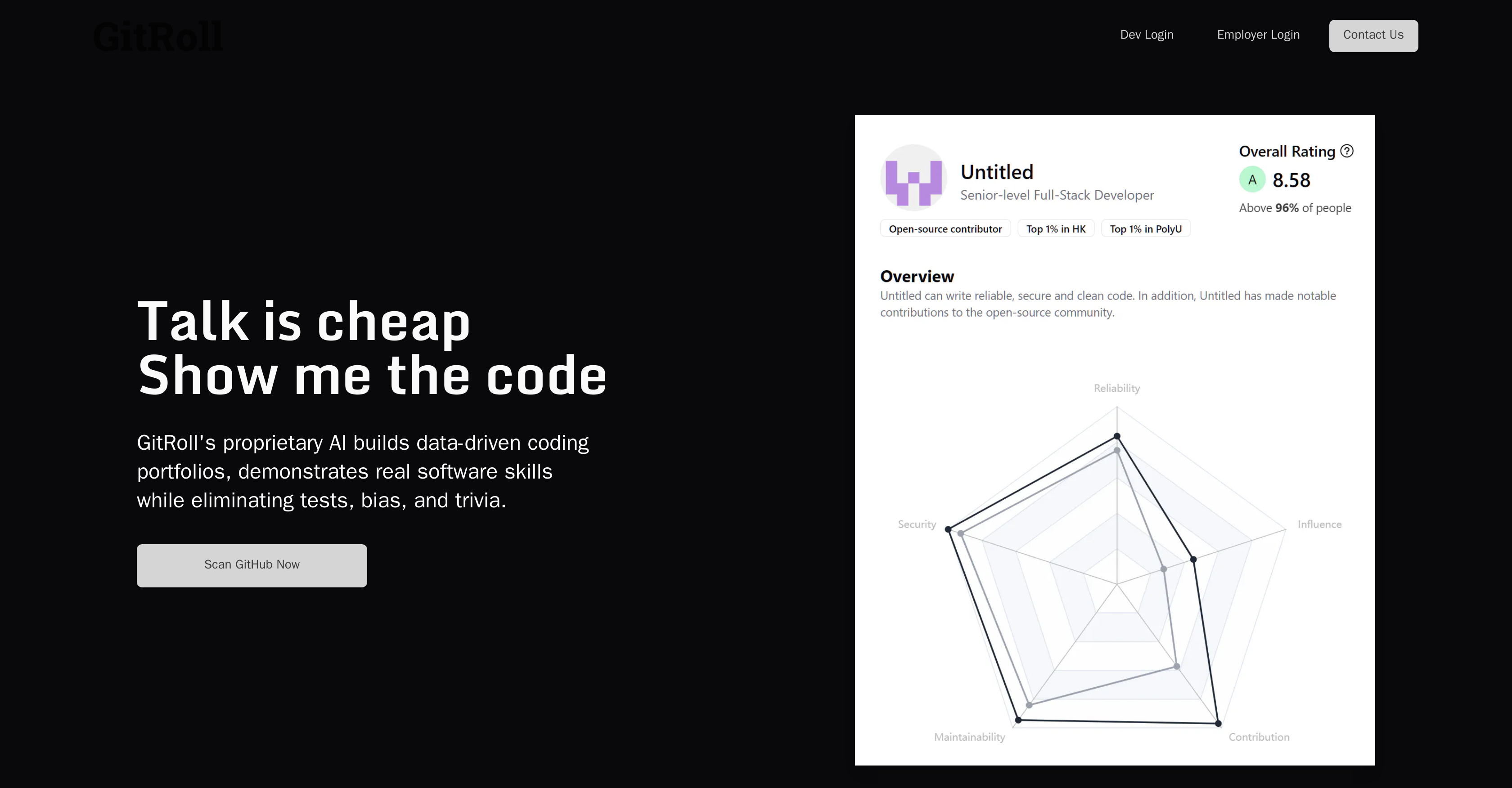
- Eliminate time-consuming coding tests by automatically evaluating candidates' actual GitHub contributions for real-world skill validation
- Discover overlooked talent globally by assessing code quality and complexity rather than educational background or location
- Reduce hiring bias with objective data-driven insights on both technical skills and collaboration abilities from peer reviews
- Streamline high-volume recruitment screening through automated analysis of code quality, bug detection, and vulnerability assessment
- Build comprehensive developer portfolios that showcase actual coding capabilities beyond resumes and theoretical tests
Pros & Cons
Pros
- Data-driven coding portfolios
- Scans GitHub contributions
- Eliminates recruitment bias
- Efficient competence validation
- Hard and soft skills evaluation
- Helps discover underappreciated developers
- Aids in global tech hiring
- Real software skills demonstration
- Removes unnecessary tests
- Facilitates unbiased recruitment
- Streamlined candidate understanding
- Peer reviews analysis
- Assesses collaboration skills
- Useful for developer showcasing
- Identifies coding competence quickly
- Identifies bugs and vulnerabilities
- Affordable tech hiring
- Vetted global IT talent discovery
- Eliminates tedious assessments
- Helps unlock employment opportunities
- Promotes code-based assessments
- Offers valid data-driven insights
- Finds undervalued software engineers
- Assesses code quality
- Discover skilled global IT talents
- Useful tool for developers and recruiters
- Helps in cost-effective talent acquisition
- Reduces reliance on lengthy quizzes
- Identifies bad coding practices
- Aids in digital ecosystem recruitment
- Highly recommended for tech talent acquisition
- Changes the technical hiring game
- Helps in Web 3.0 space recruitment
- Effective screening of multiple candidates
- Supports open-source contributors collaboration
- Streamlines candidate evaluation process
Cons
- No mobile app
- Only uses GitHub data
- Assumes active GitHub use
- No multi-language support mentioned
- Limited to technical roles
- Proprietary black-box algorithm
- Lack of API integration
- No transparent pricing details
- Limited soft skills analysis
- Requires developer GitHub access
Reviews
Rate this tool
Loading reviews...
❓ Frequently Asked Questions
GitRoll is a proprietary AI tool designed to help recruiters evaluate the skill sets of candidates, particularly their coding abilities. It functions by generating data-driven coding portfolios, which are made by scanning a candidate's contributions on GitHub. GitRoll is also beneficial to developers, providing them with an opportunity to showcase their coding abilities and gain potential job opportunities.
The principal aim of GitRoll is to provide a factual and efficient method for assessing a candidate's coding skills. It seeks to streamline understanding of applicants' genuine software skills while minimizing bias. It acts as a validation tool for competence in the field, aiming to expedite software engineer recruitment and eliminate unnecessary tests.
GitRoll utilizes artificial intelligence to thoroughly scan and analyze a candidate's contributions on GitHub. This detailed examination allows assessing the overall quality of the code, detection of potential bugs, vulnerabilities, and bad practices. It combines this quantitative assessment with data-driven insights related to soft skills such as collaboration and peer reviews.
GitRoll mitigates bias in the recruitment process by relying on objective, data-driven factors for evaluating a candidate's skills. The AI tool bases its evaluation on the actual quality and consistency of a candidate's coding, rather than subjective aspects such as personal impression or prestige of educational institutions. This systematic and factual approach helps match job requirements based on hard and soft skills rather than elements that could possibly be influenced by bias.
GitRoll further aids global tech hiring by identifying and highlighting overlooked developers who may equal or even exceed their more conventionally valued peers. This is done by basing assessments on a developer's actual coding skills and contributions rather than on artificial indicators such as location, professional network, or educational background, opening opportunities to talented developers all over the world.
Yes, developers can utilize GitRoll as a platform to demonstrate their coding skills. By building a data-driven coding portfolio parsed from their contributions on GitHub, they can succinctly showcase their abilities to potential employers.
GitRoll leverages its AI model to discover underappreciated developers who might match or even surpass their more conventionally esteemed peers. It does this by scanning and analyzing code contributions on GitHub and focusing on the quality, consistency, and complexity of the code rather than factors like reputation or location.
GitRoll acquires its data by scanning and analyzing a candidate's contributions from GitHub. It uses these contributions to create a data-driven coding portfolio that presents a detailed, evidence-based picture of a candidate's coding abilities.
The hard skills that GitRoll evaluates include code quality, bug detection, identifying vulnerabilities, and pinpointing bad practices. Each of these aspects provides critical insights into a candidate's technical proficiency and approach to writing and maintaining code.
GitRoll uses its AI model to evaluate soft skills such as collaboration and peer reviews. It achieves this by analyzing a candidate's interactions and engagements on GitHub, offering a data-driven insight into how they interact with peers and how their work is perceived and received by others.
Based on the information on their website, it appears that currently, GitRoll works exclusively with GitHub to evaluate coding skills and build coding portfolios.
The capacity of GitRoll for assessing software engineering competence is significant. Through its AI-powered model, GitRoll can handle large volumes of coding data. It scans and analyzes a candidate's contributions on GitHub in great detail, offering a comprehensive look at their technical abilities.
GitRoll certainly helps streamline the recruitment process. It reduces the need for additional coding tests by effectively evaluating real code written by a candidate. Furthermore, it helps in the unbiased selection of candidates by relying on data-driven insights about their coding skills, collaboration, and peer reviews.
GitRoll's machine learning model works by scanning and analyzing coding data from GitHub. It conducts a detailed analysis of code, scanning for bugs, vulnerabilities, and bad practices. It also evaluates soft skills based on collaboration and peer reviews. The specifics of the AI model aren't detailed on their website.
Yes, a fundamental aspect of GitRoll's functionality is providing valid data-driven insights. Both hard skills, such as code quality, and soft skills, such as collaboration and peer reviews, are evaluated to generate a comprehensive skills profile of potential candidates.
Yes, GitRoll assists developers in unlocking employment opportunities. It allows them to showcase their true coding skills by creating detailed portfolios based on their actual contributions on GitHub. This can be particularly beneficial when applying for roles that require substantial coding acumen.
GitRoll helps evaluate a developer's code quality by scanning and analyzing their contributions on GitHub. It looks at various aspects of their code such as syntax, structure, design patterns, functionality, and security measures to understand if their programming practices align with industry standards.
GitRoll does provide advantages over traditional recruitment methods. It eliminates common pitfalls such as bias, streamlines the process by quickly assessing candidates' coding skills, and enables hiring from a global talent pool. GitRoll's capability to evaluate both hard and soft skills in a data-driven manner creates efficacious recruitment results.
Yes, GitRoll can scale effectively for large recruitment tasks. By automating the technical skill assessment phase, GitRoll makes it possible for recruiters to screen large volumes of candidates quickly, increase their ease and efficiency of identifying relevant skills, and find the best match for their needs.
GitRoll is highly reliable in assessing a developer's real software skills. It does this by creating a data-driven coding portfolio parsed from their actual contributions on GitHub. By focusing on practical code analysis rather than theoretical tests, GitRoll provides a realistic and comprehensive understanding of a candidate's coding capabilities.
Pricing
Pricing model
No Pricing
Related Videos
Podcast Interview with Charles Fu, Co-Founder of Gitroll.io
Bruce Wong•154 views•May 8, 2025