

Angsa Robot
Overview
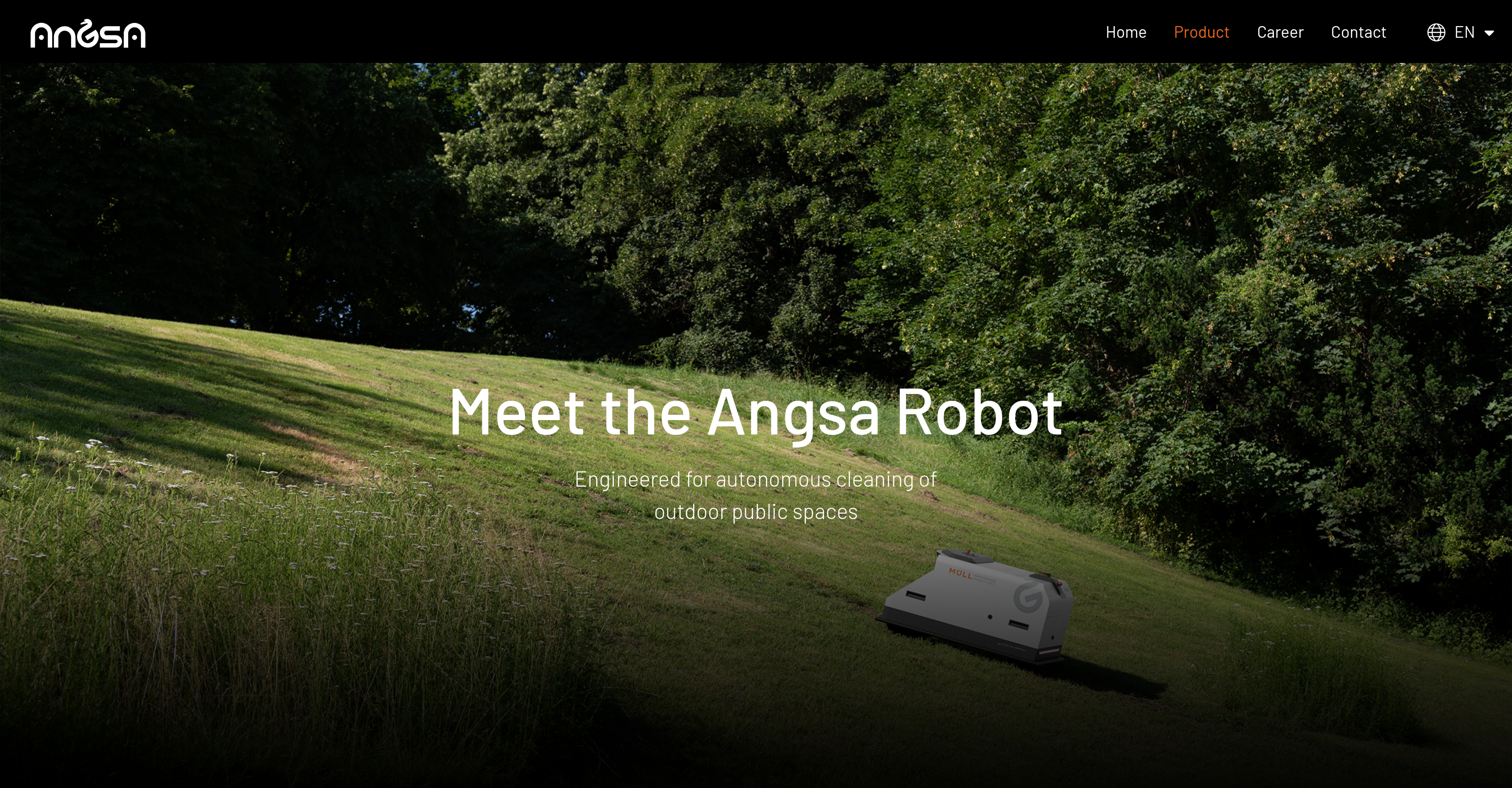
- Eliminate manual litter collection across large public areas by deploying an autonomous robot that cleans for a full 8-hour shift on a single charge
- Maintain pristine parks, plazas, and pathways on grass, gravel, and pavement with AI-powered vision that identifies and collects small litter like cigarette butts and bottle caps
- Deploy cleaning instantly with zero permanent infrastructure—simply define the area once, place the robot, and press start for daily autonomous operation
- Ensure public safety and prevent accidents with real-time obstacle avoidance, certified operation around people, and an emergency stop button
- Protect your investment against theft and unauthorized movement with integrated GPS that alerts you immediately if the robot leaves its designated zone
- Simplify maintenance and future upgrades with a robust design featuring easily swappable modules for fast, cost-effective servicing
Pros & Cons
Pros
- Autonomous outdoor cleaning
- Collects small litter items
- Avoids obstacles and people
- Operates independently
- No extra infrastructure
- Quick task setup
- Full work shift functionality
- Emergency stop safety feature
- Easy maintenance design
- Swappable modules for upgrades
- Adaptable to user processes
- Equipped with GPS
- Leaving defined area alert
- Potential future task expansion
- Prepared for manpower-limited sectors
- Cover whole shift
- Collects various waste types
- Cleans up to 8000 m
- Easily transportable dimensions
- Obstacle real-time detection
- Quick and flexible deployment
- Certified for public spaces
- Minimal user interface
- Vacuum collects wide debris
- Works on varied surfaces
- Simple deployment process
- Runs autonomously for 8 hours
- Theft and vandalism protection
- Has potential for other uses
Cons
- Limited to outdoor usage
- Only cleans small litter
- GPS dependent
- Vulnerable to vandalism
- Requires space marking
- Limited to single shift
- Can't handle larger trash
- Hard surfaces might obstruct
- Potential for false notifications
- Modules need frequent swapping
Reviews
Rate this tool
Loading reviews...
❓ Frequently Asked Questions
Angsa Robot is capable of collecting small litter items such as cigarette butts, bottle caps, plastic scraps, and glass shards. It is also in the process of testing the collection of larger items like plastic packaging.
Angsa Robot detects obstacles, including people, and responds in real time. It either stops automatically or navigates around them, then continues once the way ahead is clear. The ground is scanned using cameras while trash is identified using Artificial Intelligence.
Setting up the Angsa Robot for cleaning requires a straightforward process. Users are expected to mark the area to be cleaned once, place the robot on that area, and press start. It actively simplifies the process to adapt to the user’s regular cleaning operations.
Angsa Robot can operate for an entire work shift, approximately 8 hours, on a single charge. This ensures continuous and effective cleaning of outdoor public spaces during its operation.
The emergency stop button functions as a critical safety measure in the Angsa Robot. It allows for an immediate shutdown of the robot’s operation whenever necessary to avoid any possible accidents or malfunctions.
Yes, the modules of Angsa Robot can be easily replaced or upgraded. This feature contributes to its robust and easy-to-maintain design, making updates and maintenance both fast and cost-effective.
Absolutely, Angsa Robot is designed to adapt to your own cleaning processes. This means that after an initial setup of defining the cleaning area, daily cleaning is as simple as placing the robot in the area and pressing start.
When Angsa Robot requires assistance, it notifies the user. However, the actual methodology or mode of such notifications isn't explicitly mentioned on their website.
If Angsa Robot leaves the designated cleaning area, it immediately alerts the user. This is achieved through a GPS system fitted to the robot. The GPS also provides protection against possible theft by alerting when the robot moves outside its defined operational zone.
Yes, there are plans for the future expansion of Angsa Robot capabilities. Currently, it is focused on outdoor cleaning, but there is the intention to introduce new tasks such as weed removal and other landscaping activities.
Angsa Robot is primarily planned to be introduced into sectors where manual labor is in limited supply. Particularly, it is aimed to be a major provider of robotic services for outdoor public spaces.
The Angsa Robot measures 120 × 80 × 80 cm, making it compact and easy to transport. These dimensions ensure that the robot can be conveniently moved to different locations for cleaning operations as needed.
No, Angsa Robot does not require any additional infrastructure to function. This autonomous robot operates independently, with no need for external sensors, beacons, or buried boundary wires, allowing it to function in various environments with minimum setup requirements.
The Angsa Robot is highly effective at collecting small litter items. It can cover up to 8,000 m² and collect over 2,000 waste items per shift. The ground is scanned by cameras, trash is identified using AI, and then removed to ensure only litter is collected.
Angsa Robot was designed to clean various surfaces where traditional sweepers might fail. It can effectively clean grassy areas, gravel or crushed stone paths, and paved surfaces, meaning it has a wide range of surface adaptability.
Safety measures for Angsa Robot include an obstacle detection system that allows it to avoid people and objects, a minimal user interface with basic On/Off and Start buttons, and an emergency stop button for immediate shutdown. It is designed and certified according to current safety standards and is approved for operation around people and in public spaces.
Yes, Angsa Robot can operate around people and in public spaces. It is designed and certified to comply with current safety standards, which approve its operation in such environments.
In the future, the technology of Angsa Robot is expected to expand into other applications beyond outdoor surface cleaning. Potential examples mentioned include weed removal and other tasks in landscaping, which will assist in diverse outdoor tasks where manual labor is in limited supply.
Angsa Robot is protected against theft and vandalism through its GPS system, which alerts if it leaves the designated area. On their website, they also recommend active communication with the local community to deter potential vandalism.
The goal of introducing Angsa Robot into public spaces is to assist with cleaning tasks, particularly in areas where manual labor is scarce. This is part of their broader aim to establish Angsa as a leading provider of outdoor robotic services for maintaining clean, safe, and well-maintained public spaces.
Pricing
Pricing model
Pricing
Paid options from
N/A
