
Gemini Robotics
Execute complex, multi-step tasks with simple language commands using the unique vision-language-action model that translates instructions into physical actions.
Overview
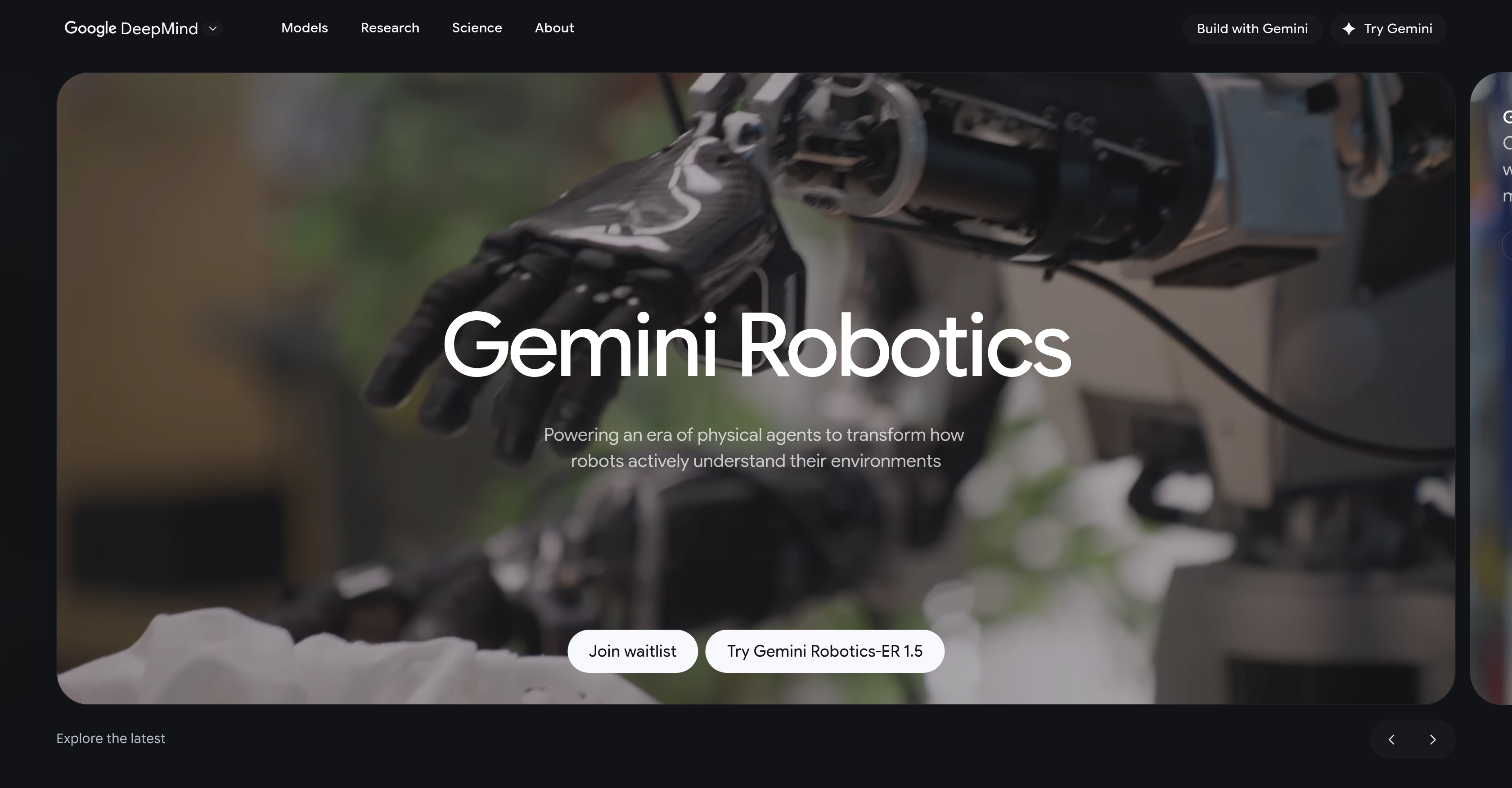
- Execute complex, multi-step tasks with simple language commands using the unique vision-language-action model that translates instructions into physical actions.
- Achieve autonomous operation in novel situations without specific training through embodied reasoning that enables logical planning and environmental understanding.
- Deploy robots in dynamic settings like manufacturing and healthcare with real-time adaptability, allowing them to respond to changing conditions and generalize behaviors.
- Ensure responsible and safe integration with ethical AI development built on comprehensive safety protocols and proactive security measures.
- Master intricate tasks requiring fine motor skills and precise manipulation, such as packing or assembly, by bridging advanced machine learning with physical world interaction.
Pros & Cons
Pros
- Develops embodied reasoning in robots
- Unique 'vision-language-action' model
- Transforms robotic understanding standards
- Improves robots' physical surroundings comprehension
- Enhances robots' planning efficiency
- Makes robotic decision-making logical
- Intersection of machine learning and physical understanding
- Creates more functional robotic systems
- Design includes ethical considerations
- Enables adaptable robotic systems
- Enhances robot task execution
- Improves robotic environment receptiveness
- Prepares robots for sustainable applications
- Enhances capabilities of broad range robots
- Uses state-of-the-art embodied reasoning model
- Designed for next-gen helpful robots
- Generates interactive worlds
- Reason through multi-step complex tasks
- Capable of responding to text, images, audio, video
- Improves quality of robot actions
- Can adapt to changes in environment
- Enables fine motor skills and precise manipulation
- Adapts to diverse array of robot forms
- Transfers learned motions across robots of varying sizes
- Takes a dual-model approach
- Partnership with Apptronik for next-gen humanoid robots
- Model optimized to run locally on robotic devices
- SDK available for robotics developers
- Collaboration with trusted testers for future guidance
Cons
- No offline capabilities
- Specific to robotics
- No user customization
- Lack of transparency in decision-making
- Reliant on vision-language-action model
- Limited to Google DeepMind ecosystem
- Possible bias in embodied reasoning
- Lack of user interface
- Focused on advanced uses, not beginner-friendly
Reviews
Rate this tool
Loading reviews...
Frequently asked questions
Gemini Robotics is an advanced AI system designed by Google DeepMind. It leverages the blend of artificial intelligence and robotics technology to enhance the capabilities of robots in various applications, guiding them to be more receptive to their surroundings and efficient in performing specific tasks. The main unique element of the Gemini Robotics AI system is the 'vision-language-action' model, which allows robots to convert visual data and human language instructions into real-world actions.
Gemini Robotics stands out among other AI systems due to its unique 'vision-language-action' model that facilitates robots to convert visual data and instructions into actual commands or physical actions. Also, it emphasizes 'embodied reasoning,' enabling robots to understand their physical surroundings accurately, plan tasks, and make logical decisions. Moreover, it intertwines machine learning and physical world understanding, an approach focused on creating robotic systems that are not only functional but also adaptable to changing scenarios.
The 'vision-language-action' model of Gemini Robotics works by processing visual data, understanding language instructions, and converting them into physical actions. It 'sees' the environment and 'understands' the given tasks via language inputs. These inputs are then converted into 'actions,' allowing the robot to perform the instructed tasks. This model essentially bridges the gap between AI perception and real-world interactions.
'Embodied reasoning' in the context of Gemini Robotics refers to the system's ability to understand the physical world around it and make decisions based on that understanding. It specializes in making logical decisions within physical spaces, planning, and breaking down goals into manageable steps to make longer-term plans and overcome unexpected problems. By embodying this reasoning, the robot can adapt and generalize its behavior to fit new situations, enhance the quality of its actions, and makes its decisions more transparent in the natural language.
Gemini Robotics enhances the capabilities of robots in multiple ways. It enables robots to understand and respond to the physical world around them, aids in complex decision making, and improves their adaptability. Its advanced 'vision-language-action' model allows robots to transform visual information and instructions into physical actions, thus expanding their ability to complete complex, multi-step tasks autonomously. It also employs an 'embodied reasoning' model that further assists robots in understanding their environment and planning logically, ensuring their efficient functioning in various application scenarios.
Gemini Robotics contributes to Google DeepMind's commitment to responsible AI development by ensuring that its design and usage incorporate significant ethical considerations. As the tool evolves, this commitment ensures ongoing adherence to Google DeepMind's overarching mission of achieving beneficial and sustainable applications of AI technology. This includes implementing proactive measures for AI safety, accepting responsibility for AI's impact on society, and fostering collaborations with experts and policymakers for the responsible evolution of AI and robotics.
Gemini Robotics helps robots understand their environment and make logical decisions via its 'vision-language-action' and 'embodied reasoning' models. The 'vision-language-action' model allows robots to perceive visual data and understand instructions, translating them into actionable commands. The 'embodied reasoning' model focusses on understanding the physical spaces around the robots and enabling them to plan logically and make decisions based on their inputs. This dual-model approach empowers the robots to comprehend and navigate their environment more effectively.
The ethical considerations built into the design and use of Gemini Robotics align with Google DeepMind's commitment to responsible AI development. The focus is on ensuring the benefits of AI and robotics extend to all of humanity, through measures like AI safety, comprehensive safety protocols, and collaborations with external experts and policymakers. This extends to routine checks for proactive security against evolving threats and mindful development that respects the privacy and rights of the individuals who interact with these systems.
Pricing
Pricing model
Pricing
Paid options from
N/A
Related Videos
Gemini Robotics 1.5: Enabling robots to plan, think and use tools to solve complex tasks
Google DeepMind•178.5K views•Sep 25, 2025