

LTX by Lightricks
Overview
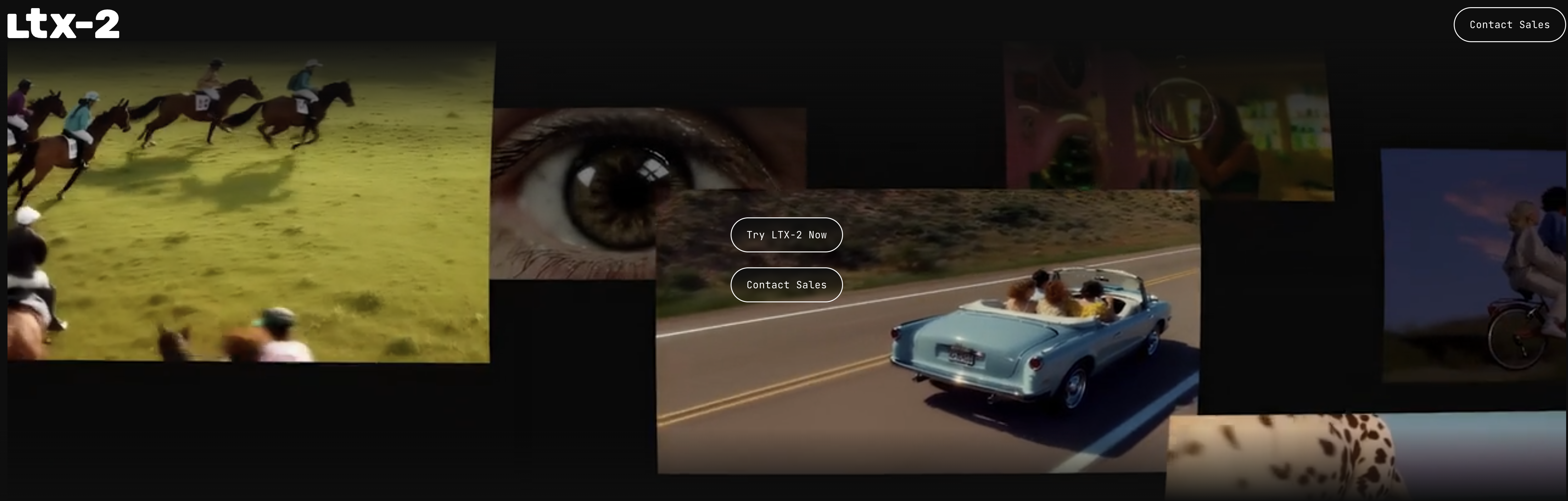
- Create perfectly synchronized video with matching audio in a single unified process through multimodal generation that treats sound as foundational
- Automate labor-intensive VFX tasks like motion tracking, rotoscoping, and plate replacement to dramatically reduce production time and costs
- Generate delivery-ready 4K video outputs alongside quick previews using the same platform for both prototyping and final production
- Maintain complete creative control over pacing, motion, and narrative tone through text, image, depth, and reference-video inputs
- Customize and fine-tune the model to your specific needs with open-source access to weights and training code
- Run high-fidelity video generation on consumer-grade GPUs without expensive hardware investments
- Integrate directly with professional editing suites, game engines, and VFX pipelines for seamless workflow integration
- Shape frame-coherent storytelling with multi-keyframe conditioning and 3D camera logic for consistent visual narratives
Pros & Cons
Pros
- Works on consumer-grade GPUs
- Combines visuals, audio, performance
- Efficient visual enhancement
- Synchronizes sound and visuals
- Connects with production workflows
- Supports editing suites
- Works with game engines
- Compatible with VFX pipelines
- Quick preview and 4K delivery
- Multimodal input control
- Provides fine-tuning options
- Open-source and customizable
- Automates video editing tasks
- Cost and time effective
- Empowers visualization in pre-production
- Ideal for studios, developers
- Optimized for GPUs
- Synchronized audio-visual outputs
- Multiflow performance modes
- Supports 4K output
- Multi-keyframe conditioning
- 3D camera logic
- Customizable for unique needs
- Automates motion tracking
- Automates rotoscoping
- Optimized for plate replacement
- Reduces production costs
- Open access to model weights
- Operates on high-fidelity visuals
- Broadcast tool compatibility
- Post-production use cases
- Pre-production use cases
- Animation use cases
- Restoration use cases
- Open-source video generation
- Supports real production workflows
- Ideal for independent creators
- Comprehensive creative workflows solution
- Synchronizes motion, dialogue, music
- Automates plate replacement
- Integrated with editing suites
- API access for pipelines
- Visualizes storyboards before production
- Upscales and enhances footage
- Restores archival footage
- Supports multi-keyframe conditioning
- Direct control over elements
- Faster pre-production with simulation
- Extends resolution to 4K
- Creates fluid motion in videos
Cons
- Limited to consumer-grade GPUs
- Heavy reliance on customization
- Limited runtime efficiency
- Deeper learning curve
- Not ideal for beginners
- Complex integration for workflows
- Not directly ready for use
- Requires fine-tuning for quality
- Demanding resource requirements
- Latent release of training code
Reviews
Rate this tool
Loading reviews...
❓ Frequently Asked Questions
LTX-2 is an open-source, next-generation multimodal AI model developed by Lightricks. Primarily designed for video generation, it combines sound, high-fidelity visuals, and multi-flow performance modes into a single cohesive system, running optimally on consumer-grade GPUs. It's designed to support real production workflows across different industries and can generate, enhance, and repurpose visuals efficiently. Unlike many models, LTX-2 considers sound and visuals in a unified production process, creating synchronized motion, dialogue, ambience, and music.
LTX-2 is specifically designed for integration with professional editing suites and game engines. It fits perfectly within real production workflows, giving users the flexibility to connect directly with these platforms. The integration process is straightforward and efficient, allowing for seamless connectivity and workflow consistency.
Yes, LTX-2 works effectively with VFX pipelines and broadcast tools. The model connects directly with such tools, becoming an important part of the production workflow. This allows users to create and manage high-fidelity visuals with inherent sound, all while ensuring seamless integration with real-world production infrastructure.
The quality of videos created with LTX-2 is paramount. The AI model supports both quick previews and delivery-ready 4K outputs. This high-resolution output ensures that the visuals are clear, detailed, and high-fidelity, satisfying the needs of professional content creators and developers for high quality production.
Absolutely. As an open-source tool, LTX-2 is designed to allow researchers, enterprises, and independent creators to customize the model to fit their individual needs. Users can adjust text, image, depth, and reference-video inputs for creative control. In addition, it offers multi-keyframe conditioning, 3D camera logic, and fine-tuning options to ensure tailored output.
LTX-2 is capable of automating a variety of production tasks. It offers solutions for motion tracking, rotoscoping, and plate replacement, among others. These automated abilities reduce the manual labor involved in such tasks, making the production process faster and more efficient.
LTX-2 reduces production cost by automating a number of labor-intensive tasks, reducing the time and manpower ordinarily required in pre-production and post-production workflows. Beyond automation, its open-source nature and ability to run on consumer-grade GPUs also reduces hardware investments and development costs, thereby making the production process more cost-effective.
Open access to the model's weights and training code are scheduled for release in upcoming updates to LTX-2. These features will examine researchers, enterprises, and independent creators to customize, extend, and innovate freely, bringing even more flexibility to the use of this model in various creative and scientific scenarios.
LTX-2 is ideal for a broad range of users. These include but are not limited to studios, research teams, solo developers, and independent creators. Its flexibility, customization options, and versatile application in automating numerous video production tasks make it a powerful tool for various stakeholders in the industry.
LTX-2 is designed for use by a diverse range of users. This encompasses researchers, enterprises, professional studios, game developers, broadcast teams, independent creators, and solo developers. The open-source nature of the model encourages its use by those who wish to customize and innovate on the platform.
Yes, LTX-2 is capable of running on consumer-grade GPUs. Even in such conditions, it still delivers high performance, synchronizing visuals and sound, while allowing users to generate, repurpose, and enhance visual content efficiently and in high resolution.
LTX-2 enhances and repurposes visuals by providing dynamic control through text, image, depth, and reference-video inputs. This flexibility, together with its capacity for high-fidelity visuals, lends itself to visual improvement. The AI also offers multi-keyframe conditioning, 3D camera logic, and fine-tuning options, further enhancing its graphic capability.
LTX-2 unifies the production of sound and visuals by generating both in a synchronized, unified process. This coherent output ensures synchronization between motion, dialogue, ambience, and music. Unlike many models, which treat sound as an afterthought, LTX-2 prioritizes sound as a key element of the integrated production process.
Yes, LTX-2 supports both quick previews and delivery-ready 4K outputs. So, you can use it to both generate and view sample outputs, as well as create final, high-quality, 4K video content ready for delivery and broadcast.
LTX-2 provides creative control to users through a variety of inputs. These include text, image, depth, and reference-video inputs. It also offers multi-keyframe conditioning and 3D camera logic, allowing artists to shape pacing, motion, and overall narrative tone. Therefore, users can guide the AI to produce visuals that align to their set direction.
LTX-2 uses text, image, depth, and reference-video inputs to generate output. Users can use these controls to shape pacing, motion, and tone of videos. In addition, it also offers multi-keyframe conditioning, 3D camera logic, and fine-tuning options ensuring frame-coherent storytelling and stylistic consistency across each generation.
The fine-tuning options in LTX-2 are varied and aim to give users maximum control over video creation. They include features like multi-keyframe conditioning, 3D camera logic, and other modifications. These options allow users to shape pacing, motion narrative tone, and ensure stylistic consistency across all scenes.
The use cases for LTX-2 encompass a wide range of applications. These include post-production, pre-production, animation, restoration and many more. LTX-2 provides solutions to automate tasks like motion tracking, rotoscoping, plate replacement and others. Studios, research teams, and solo developers can harness this AI to reduce the time and cost of production while maintaining quality.
LTX-2 synchronizes audio and image creation by generating visuals and sound in a single, unified process. The audio-visual synchrony leads to coherent motion, dialogue, ambience, and music ideal for creating trailers, product demos, branded content, and story-driven video that feel real and intentional.
Yes, even if you're an independent creator, you can use LTX-2. The tool is created as an open-source platform, and its design allows independent creators to customize the model to fit their specific needs. It's user-friendly and performance efficient on consumer-grade GPUs, providing independent creators access to professional-level creative power.
Pricing
Pricing model
Free Trial
Paid options from
$6/month
Billing frequency
Monthly