Overview
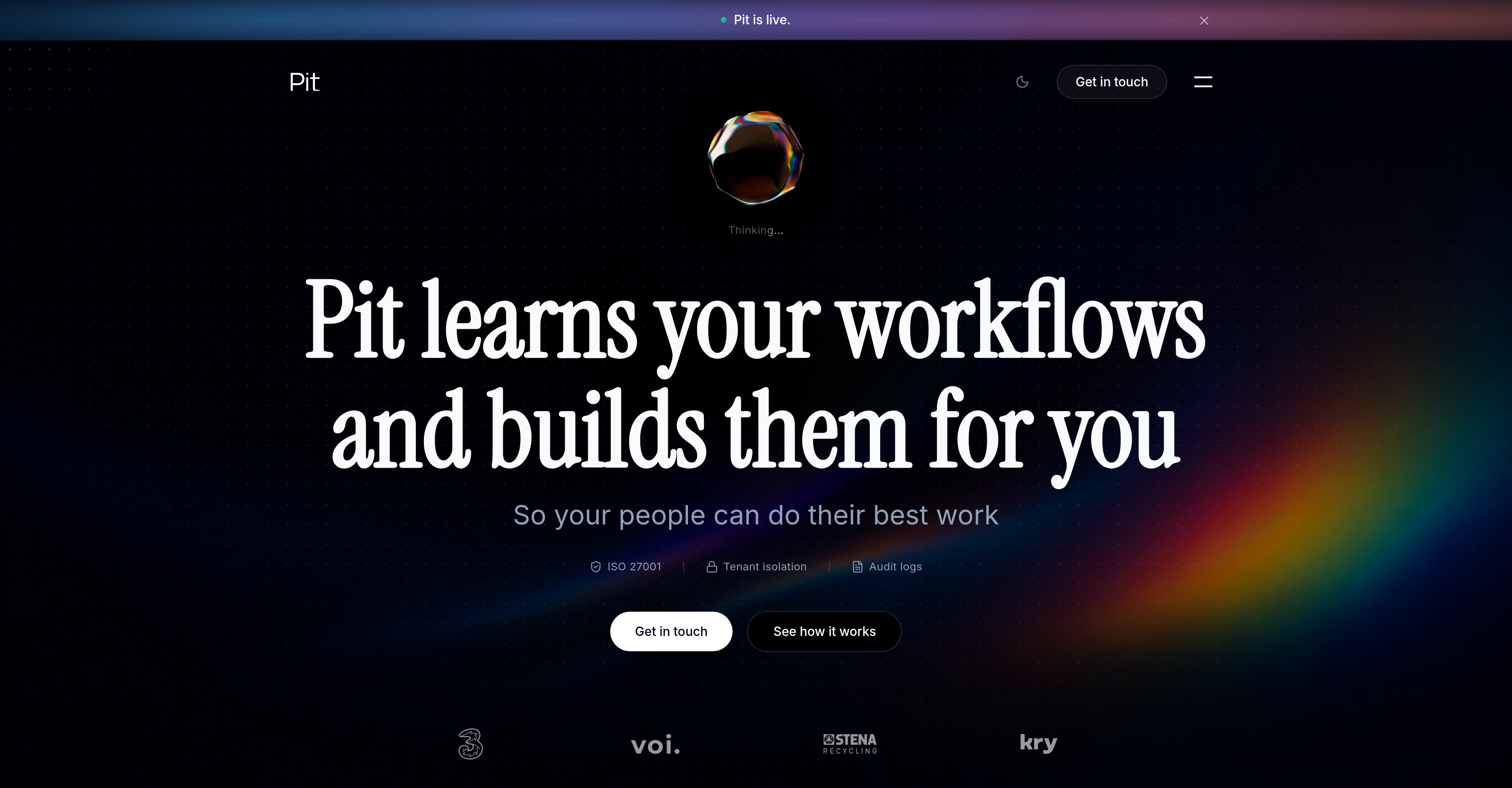
- Eliminate manual data transfer errors across systems by automating cross-system workflows with seamless integration into your existing business tools.
- Streamline multi-step approval chains into automated processes that reduce cycle time and remove bottlenecks without any technical expertise.
- Prevent internal resource drain by deploying custom-built operational systems with buy convenience, avoiding months of in-house development effort.
- Maintain unremitting reliability in production with structured systems that are monitored and rollback-capable, ensuring operations never skip a beat.
- Adapt operations to changing business requirements effortlessly through automated documentation that makes system iteration simple and manageable.
- Meet procurement compliance requirements out of the box with SSO, role-based access, complete audit trails, tenant isolation, and ISO 27001 conformance.
- Free your teams to focus on high-impact work by automating manual, error-prone operations that previously consumed their time and energy.
Pros & Cons
Pros
- Customizes operational systems
- Adapts to business processes
- Reduces internal resource drain
- Mid-to-large operations suitability
- Improves manual processes
- Automates data transfer
- Constructs approval-chain solutions
- Integrates with pre-existing tools
- Increases workflow cohesion
- Eliminates manual inter-system workload
- Structured system creation
- Ensures business reliability
- Auto-generates process documentation
- Compliant & secure platform
- Includes Single Sign-On (SSO)
- Role-based access feature
- Complete audit trails
- ISO 27001 conformity
- Ensures data protection
- Non-technical usability
- Reflects evolving business needs
- Tenant isolation for security
- Communicates user issues
- Refines operational solutions
- Suitable for critical tasks
- Supports system evolution management
- Streamlines approval chain
- Reduces operational work
- Increases focus on strategic work
- Automatic system documentation
- Adheres to procurement checklist
- Monitored operational processes
- Retrievable rollback ability
- Customized internal tool building
- Automates Cross-system data reconciliation
- Removes manual busywork
- Production-grade tools
- Harnessed code generation
- Futureproofs system changes
- GDPR compliant
- Reduces technical debt
- Ready for production software
- Automated operational work
- Automates approval workflows
- Pit cloud for security
- Versatile model options
- Regulated sector suitability
- Rapid system production
- No migration project necessary
Cons
- Only for mid-to-large businesses
- May not support small-scale automation
- Customization process potentially time-consuming
- Dependant on accurate user descriptions
- Limited existing software compatibility
- Requires initial manual setup
- Highly specific use-cases
- No mention of multi-language support
- Focus on business operations only
- Possible long system integration
Reviews
Rate this tool
Loading reviews...
❓ Frequently Asked Questions
Pit is an AI platform that automates and simplifies business operations. The system learns how a business operates and creates customized systems to manage those operations, with the aim of saving time and resources.
Pit learns business operations through inputs given by users, who describe the issues they're facing. Based on this information, the Pit system builds and refines tailored solutions that address the specified problems.
Pit can automate operations that are manual, prone to inefficiency, and errors. This includes transferring data across systems, streamlining approval chains, and other operational tasks which can then enable teams to focus on tasks that genuinely move the business forward.
Pit increases operational efficiency by eliminating the need for manual workload between systems. It automates various operational tasks, creating a cohesive workflow that enhances efficiency. The systems built by Pit also integrate seamlessly with existing business tools, enhancing efficiency further.
Pit integrates seamlessly with existing business tools, eliminating the need for manual workload between systems. This not only ensures workflows remain cohesive but also contributes to increased operational efficiency.
Pit adapitable to changing business requirements by offering automated documentation of the processes it handles. These records make it easier to manage and iterate on the system, allowing it to evolve as business needs change.
Pit has several security measures in place, such as Single Sign-On (SSO), role-based access, complete audit trails, tenant isolation, and conformance to ISO 27001 standards, ensuring the platform is compliant and secure.
Pit ensures data protection with its compliant and secure platform which includes necessities like Single Sign-On (SSO), role-based access, complete audit trails, tenant isolation, and conformance to ISO 27001. It meets procurement checklist requirements, thereby ensuring data protection.
The ideal user for Pit are mid-to-large operations with manual processes prone to inefficiency and errors. Those who find it challenging to transfer data across systems or streamline approval chains would benefit from the capabilities of Pit.
Technical expertise is not a necessity to use Pit. The system aims to handle complexity, requiring users only to define their requirements. Such user-friendly design makes it easy for non-technical users to operate Pit effectively.
The 'buy' convenience option in Pit refers to the concept of users buying custom-built solutions rather than developing them in-house. This option solves the problem of internal resource drain that occurs with projects that require in-house development.
Pit brings improvements to approval chain management by creating systems that streamline and automate the process, reducing the time and manual effort spent in these tasks and contributing to improved operational efficiency.
Pit supports ISO 27001 conformance by providing a compliant and secure platform with its necessities like Single Sign-On (SSO), role-based access, complete audit trails, tenant isolation, all of which conform to ISO 27001 standards.
Pit plays a role in data transfer automation by creating custom systems that eliminate the need for manual transfers of data across different systems. It automates these processes, improving efficiency while reducing errors and fostering a seamless workflow.
Pit deals with tenant isolation by providing a secure platform, where each user or tenant operates within a fully self-contained environment. This method effectively minimizes the risk of data interference between different tenants and ensures data security.
Pit offers complete audit trails, providing visibility into every action taken within its system. This feature not only enhances the governance of the automated business processes, but also contributes significantly to the overall security and compliance protocols of the platform.
Pit benefits teams with manual operations and processes by learning how the business operates and creating customized, automated systems to manage those operations, saving time and resources and allowing teams to focus on tasks that genuinely move the business forward.
Pit offers solutions for role-based access by providing a secure platform with its necessities like Single Sign-On (SSO) and role-based access, which helps restrict and control access to information and resources, ensuring data protection and security.
Yes, Pit can create custom systems tailored for specific business operations. Based on input from users about the issues they're facing, Pit builds and refines solutions to deal with those particular challenges, resulting in a customized system suited to the individual business's needs.
Pit addresses the issue of internal resource drain by providing custom-built solutions with a 'buy' convenience. This system helps eliminate the time, money and resources typically associated with developing in-house solutions — offering the benefits of a uniquely designed system without the resource drain.
Pricing
Pricing model
No Pricing