
Overview
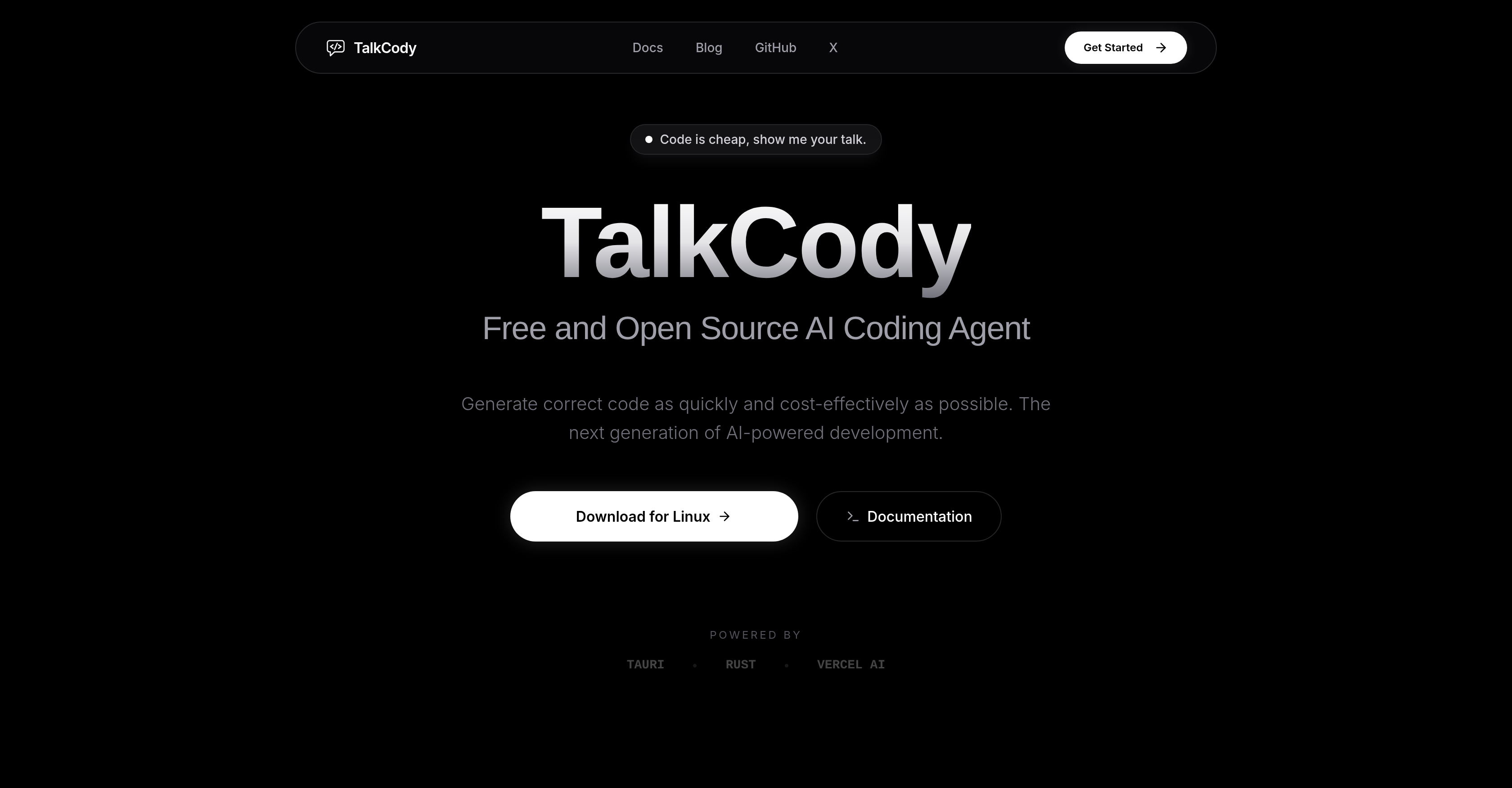
- Complete complex coding projects in a fraction of the time with Four-Level Parallelism that runs tasks, agents, and tools simultaneously.
- Keep all code and data secure on your local machine with offline functionality, ensuring complete privacy and control.
- Switch seamlessly between AI models from OpenAI, Anthropic, Google, or local models to avoid vendor lock-in and optimize for each task.
- Adapt the tool to your exact style with fully customizable workflows and multimodal input via text, voice, or images.
- Extend functionality infinitely by connecting to any external tool or service through Model Context Protocol (MCP) server support.
- Access and share specialized agents and workflow configurations with the community via the built-in Agents & Skills Marketplace.
- Execute and test code directly within the platform using the integrated terminal for a streamlined development loop.
- Run a smooth, responsive native desktop application engineered with Rust and Tauri for high-performance efficiency.
Pros & Cons
Pros
- Free and open-source
- Multi-model support
- Offline functionality
- Local storage of data
- Privacy-conscious design
- Built with Rust, Tauri
- Integrated terminal
- Customizable workflows
- Supports multiple inputs (text, voice, images)
- Agents & Skills Marketplace
- Model Context Protocol server support
- Enhanced coding speed, efficiency
- No vendor lock-in
- Performance-oriented
- Privacy-focused
- Community sharing
- Four-Level Parallelism for simultaneous operations
- Adapts to developer's coding style
- Potential for limitless tool connection
- Responsive user experience
- User rights respected
- Personalized workflow
- Respects user privacy
- Coding assistance
- Code generation
- Parallel computing
- Code stored locally
- Developers can use local models
- Generation of correct, efficient code
- Simultaneous project, task, agent, tool operations
- Amplifies collective efficiency
- Avoids vendor lock-in
- Requires no internet connection
- Native-like application efficiency
- Promotes developer freedom
- Full control over work and data
Cons
- Limited language (Rust)
- MCP server knowledge required
- Dependent on third-party models
- Complex parallelism feature
- Offline use restricts updates
- Community sharing privacy concerns
- Requires manual model swapping
- No built-in coding tutorials
- Learning curve for customization
Reviews
Rate this tool
Loading reviews...
❓ Frequently Asked Questions
TalkCody is a next-generation AI-powered, open-source platform for coding, made by developers for developers. It offers a comprehensive toolkit aimed at enhancing the speed and efficiency of coders, offering features such as multimodal inputs, integrated terminal and customizable workflows
TalkCody sets itself apart by allowing for seamless swapping between AI models from various providers including OpenAI, Anthropic, Google, or local models. This avoids vendor lock-in, offering maximum flexibility. It also provides an 'Agents & Skills Marketplace' for community members to share workflows and specialized agents.
TalkCody ensures privacy by storing all code, data, and user information locally on the user's machine and functioning even offline. It also assures that the code never leaves your machine, thus ensuring user privacy.
TalkCody offers multi-model support which allows for seamless swapping between AI models from multiple providers, including OpenAI, Anthropic, Google, or local models. This functionality provides flexibility and avoids any specific vendor lock-in.
TalkCody supports multi-modal inputs including text, voice, and images. This allows coders to input code in multiple ways, making the platform versatile and accessible.
The 'Agents & Skills Marketplace' in TalkCody is a platform hosted within the coding agent that allows for the sharing and download of workflows and specialized agents among community members.
Workflows in TalkCody are fully customizable. This means that they can be tailored to meet specific coding needs, thus allowing for streamlined operations and more efficient work processes.
Yes, TalkCody can function offline, further enhancing privacy as all code, data, and user information are stored locally on the user’s machine.
The Model Context Protocol Server in TalkCody extends the platform's capabilities by enabling the connection to any tool or service, thus allowing for enhanced functionality and versatility.
Yes, with TalkCody, all the data is stored and processed locally on the user's machine which not only improves performance but also enhances user privacy.
TalkCody enhances coding speed and efficiency by offering a comprehensive toolkit including features like mult-modal inputs, an integrated terminal, and customizable workflows. Additionally, it leverages four-level parallelism which allows tasks, agents and tools to run simultaneously, leading to the completion of complex projects in fractions of the usual time.
TalkCody is built with Rust and Tauri, which are known for their performance and efficiency, thus ensuring native-like application efficiency.
TalkCody’s native-like application efficiency comes from the fact that it is engineered with Rust and Tauri, technologies known for delivering efficient performance in application development.
The integrated terminal in TalkCody allows for seamless, efficient execution of code directly within the platform, thus enhancing code development and testing process.
TalkCody can be downloaded from its official website or from its GitHub repository.
Developers using TalkCody can benefit from its blazing-fast development process enabled by four-level parallelism, flexibility due to seamless swapping between AI models, privacy due to local storage, and pro-grade features such as multimodal input, MCP Server support, customizable workflows and more.
TalkCody ensures vendor independence by providing a platform that supports a multitude of AI models from various providers like OpenAI, Anthropic, Google, or local models. This multi-model support allows users to avoid any vendor lock-in and choose the model that works best for them.
TalkCody offers 8 ways to use the platform completely free. The platform allows users to leverage their existing ChatGPT Plus/Github Copilot subscriptions or use any AI model from any provider - minimizing cost while maximizing flexibility.
By 'Code is cheap, show me your talk', TalkCody means that simply generating code isn't adequate- it prides itself on allowing developers to execute plan, write, and test code all within the same platform.
Capabilities of TalkCody can be extended through Model Context Protocol, which allows for connecting to any tool or service thus extending its functionalities infinitely.
TalkCody's multi-model support allows developers to seamlessly switch between different AI models from multiple providers including OpenAI, Anthropic, and Google, or even opt to use local models. This aspect of TalkCody's design ensures maximum flexibility based on individual project needs while also avoiding vendor lock-in, a common problem in the field. This means developers can use what they believe works best for each task, optimizing the outcome.
The privacy-conscious design of TalkCody ensures that all data, code, and user information reside securely on the local machine. It thus provides a higher level of privacy by reducing the risk of data breaches as data does not get transmitted or stored off-site. Additionally, it respects user rights by avoiding vendor lock-in, guaranteeing users full control over their work and tooling. TalkCody also functions entirely offline, adding another layer of data security.
TalkCody facilitates highly personalized workflows, allowing developers to work in the manner that is most efficient and comfortable for them. Customizable workflows give developers the flexibility to adapt the tool to their preferred coding style and project requirements. Furthermore, the tool allows the sharing of these workflow configurations on the 'Agents & Skills Marketplace', potentially benefiting other community members.
The Agents & Skills Marketplace within TalkCody is a platform where developers can share workflows and specialized agents with the broader community. This marketplace serves as a hub for knowledge sharing, enhancing the collective efficiency of the entire TalkCody user community. It allows developers to learn from each other, utilize shared strategies, and thus enhance their code generation abilities.
TalkCody provides support for the Model Context Protocol (MCP) server extending their platform's capability to connect to any tool or service. This makes it possible for TalkCody to integrate with a variety of external services and tools, thereby expanding its utility and flexibility for users.
TalkCody's purpose is to make code generation as fast, efficient, and cost-effective as possible. It offers coding assistance through AI models which can generate code quickly, saving time and resources. The platform's multi-model capability means that developers can choose between different AI models to get the best possible output, depending on the task at hand.
TalkCody enhances time-efficiency in coding through its Four-Level Parallelism feature. This allows simultaneous operations at project, task, agent, and tool levels. Such parallelism significantly reduces the time required to complete complex projects, thus boosting productivity and speed in the coding process.
TalkCody supports multi-modal inputs including text, voice, and images. This range of input methods offers developers flexibility, accommodating different work styles and task requirements. Whether developers prefer coding through typing, speaking, or even providing visual input, TalkCody can process the information and use it to generate code.
TalkCody avoids vendor lock-in by offering a system that is flexible and adaptable to a variety of AI models. Developers can switch between AI models from different providers, including OpenAI, Anthropic, Google, and local models, allowing them to use what works best for each task. This means that developers are not tied to one specific tool or vendor, leading to more control and flexibility.
TalkCody is considered an on-premise solution because all its operations, including processing and storage, take place on the user's local machine. The tool does not rely on external servers or storage, which can often be a vector for data breaches. By keeping all data and processes on-site, it ensures a higher level of security and control for the user.
TalkCody offers personalized workflows, allowing developers to configure the platform according to their unique work styles and project requirements. Developers can set their preferred modes of operation, tailor the use of tools and agent behaviors, and adjust them as needed to maximize coding speed and efficiency. This customizability means that TalkCody is highly adaptable to the personal needs and coding styles of individual developers.
Built using Rust and Tauri, TalkCody is engineered for native-like application performance. This means that, despite being a feature-rich and complex tool, it runs smoothly and responsively much like a native application. The result is a smooth and intuitive user experience that allows developers to focus on their code without being distracted by application performance issues.
TalkCody upholds users' rights foremostly by prioritizing user privacy. All data, code, and user information are stored locally, which means that the user retains full control over their data. Additionally, TalkCody ensures software is free of vendor lock-in, giving the user the power to use and modify the software based on their needs. This also means that the user is not tied to any specific AI model and can switch between models from different providers, including local models, thus ensuring maximum utility and flexibility.
TalkCody is built with Rust and Tauri. Rust is a high-level, multi-paradigm programming language that is highly performance-focused and offers memory safety without needing a garbage collector. Tauri is a framework for building lightweight, secure, and cross-platform desktop applications with JavaScript, Typescript, Python, Rust, etc.
AI is central to TalkCody's operation. The software leverages various AI models, including those from OpenAI, Anthropic, Google, or local models to generate correct code quickly and efficiently. These AI models serve as coding assistants, interpreting multi-modal inputs to create the most appropriate code. Further, through its multi-model support, developers can switch between AI models on-the-go, using the model they deem the best fit for the task at hand.
TalkCody furnishes a collection of developer tools designed to enhance coding speed and efficiency. This includes the Multi-model Support, Four-Level Parallelism for simultaneous operations, multi-modal input capability, Agents & Skills Marketplace, MCP server support, and customizable workflows. All these elements work collaboratively to create a wholesome and efficient coding environment, catering to every need of the modern developer.
TalkCody is considered privacy-focused due to several reasons. Most importantly, all code, data and user information are kept on the local machine, eliminating risks associated with cloud storage or data transmission. The tool can operate entirely offline, further securing user data. Its privacy-conscious design ensures that the user retains total control over their work, data, and the tools they want to use, and there's also no vendor lock-in.
TalkCody ensures optimal coding efficiency through a number of high-performance features, notably its Four-Level Parallelism that allows simultaneous operations at the project, task, agent, and tool levels, drastically reducing the time needed to complete complex projects. Also, its multi-model support lets developers switch between AI models from different providers for maximum flexibility and optimal results. Other tools like multi-modal inputs, customizable workflows, and community sharing through the Agents & Skills Marketplace, further contribute to TalkCody's enhancement of coding efficiency.
TalkCody’s Four-Level Parallelism is a feature that permits simultaneous operations on four different levels - the project, task, agent, and tool. It allows developers to work on different aspects of their coding projects simultaneously, thereby speeding up the development process significantly. With this feature, complex projects that typically require a long time to complete can be finished in a fraction of the time.
Pricing
Pricing model
Pricing
Paid options from
N/A