

Overview
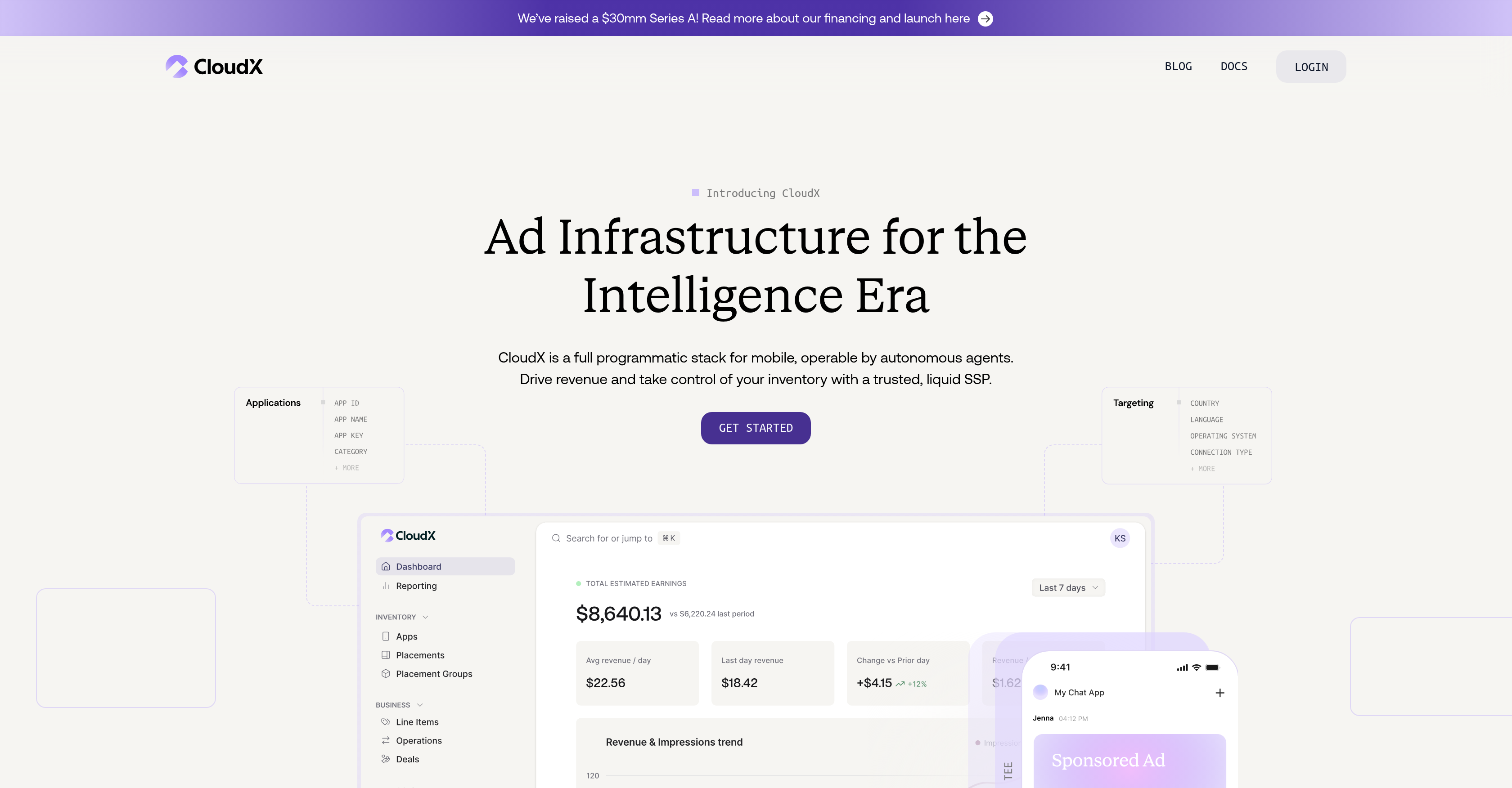
- Maximize revenue from every ad impression by accessing a liquid marketplace that combines SDK and non-SDK programmatic buyers, creating wider demand competition.
- Gain granular control over your auction strategy and pricing with a 'Monetization as Code' approach, using line items, per-request floors, and auction simulation.
- Optimize for long-term value instead of short-term gains with holistic visibility into real-time bids, auction results, and performance analytics.
- Integrate new monetization ideas rapidly without adding more SDKs to your stack, as the platform connects to major buyers like Meta, Unity, and Moloco.
- Automate and drastically reduce mobile SDK integration time using a layered AI agent system that delivers production-ready code.
Pros & Cons
Pros
- Integrated with major platforms
- Control over inventory
- Holistic visibility into bids
- Monetization as Code
- Real-time analytics
- Automated mobile SDK integration
- Rapid integration for publishers
- Multiple auction scenarios
- Per-request price floors
- Accommodates non-SDK buyers
- Direct control over competition
- Prevents addition of more SDKs
- Long-term value optimization
- Visible auction results
- Log-level access
- Release tracking
- Auction simulation features
- Spectrum of demand access
- Production-ready code provision
- Intelligent revenue augmentation
- Allows new monetization ideas
- Cloud-based platform
- Battle-tested features
- Advert performance visibility
- Agentic enabled approach
- Operable by autonomous agents
- Increased revenue generation
- Built for mobile publishers
- Liquid marketplace provision
- Trusted advertising stack
- Observability into auctions
- MCP and Agent stack
Cons
- No web-based functionality
- Lack specific data privacy features
- Dependency on autonomous agents
- Lacks offline work capability
- Limited integration with smaller platforms
- Potential compatibility issues with non-SDK bidders
- Lack of multi-language support
- No mentioned user roles/permission feature
- Absence of detailed error reports
- No demonstration of robust scalability
Reviews
Rate this tool
Loading reviews...
❓ Frequently Asked Questions
CloudX is a supply-side programmatic platform engineered specifically for mobile and AI publishers. It provides control over inventory and bolsters revenue generation with AI workflows in a liquid marketplace.
CloudX provides mobile and AI publishers with a trusted stack, granting control over their inventory. It offers the ability to optimize monetization against long-term value. The 'Monetization as Code' approach allows publishers to introduce new monetization ideas with complete visibility into bids, auction results, and performance. CloudX also offers a layered AI agent system to automate mobile SDK integration.
CloudX bolsters revenue by providing control over inventory, enabling real-time optimization against long-term value, and providing an AI workflow. It also creates a liquid marketplace for buying and selling ads, ensuring a fair and open competition, maximizing the revenue potential of every ad space.
'Monetization as Code' in CloudX refers to a set of features that allow publishers to define the rules for monetization at a granular level. These include line items for different auction scenarios, real-time analytics, and auction simulation, allowing for an in-depth understanding and control over how ad inventory is monetized.
CloudX integrates with major platforms like Meta, Unity, Liftoff, Magnite, InMobi, Mintegral, and Moloco.
CloudX provides publishers with features such as per-request price floors, real-time analytics, and log-level access. These tools provide publishers with an opportunity to control how they compete, who they compete with, and how they price and package their ad inventory for competition.
Autonomous agents in CloudX are likely AI tools that facilitate the integration and usage of the platform. They automate tasks such as mobile SDK integration, drastically reducing the manual work required., improving the speed and accuracy of the operations.
CloudX allows non-SDK programmatic buyers to participate in the same auction as SDK bidders. This allows for a broader competition and gives publishers access to a wider spectrum of demand, from performance to brand.
Layered AI agent system in CloudX is a feature that automates mobile SDK integration. This reduces integration time significantly and provides production-ready code quickly, which helps publishers to integrate with the platform more efficiently.
CloudX's AI workflows and liquid marketplace offer several benefits. AI workflows streamline processes, increase efficiency and hence can boost revenue. The liquid marketplace creates a competitive environment that maximizes demand and revenue potential of every ad space.
CloudX optimizes monetization against long-term value by giving publishers direct control over who they compete with, access to their inventory and the ability to introduce new monetization ideas with visibility into bids, auction results, and performance.
Real-time analytics in CloudX allows publishers to monitor the performance of their ad inventory in real time. This includes visibility into bids, auction scenarios and results. It ensures informed, timely decisions for optimal monetization.
Auction simulation in CloudX allows publishers to test and predict the outcomes of various auction scenarios. This feature helps to understand potential outcomes, analyze and create more effective monetization strategies.
CloudX avoids adding more SDKs by accommodating non-SDK programmatic buyers. This allows them to compete in the same auction with SDK bidders and gives publishers access to a wide spectrum of demand without the need to integrate additional SDKs.
In the context of CloudX, a 'liquid marketplace' refers to a highly flexible and dynamic environment for buying and selling ads. It aims to provide a fair and efficient ad trading experience to both publishers and advertisers, potentially maximizing revenue for publishers.
CloudX aids in mobile SDK Integration through its layered AI agent system that automates the integration process. This reduces integration time significantly and produces production-ready code promptly, facilitating a quicker integration for publishers.
The 'trusted stack' provided by CloudX allows publishers to take control of their inventory and optimize monetization against long-term value. It includes features for real-time analytics, log-level access and release tracking. The trusted stack thus becomes a reliable and comprehensive toolset for managing and maximizing ad revenue.
CloudX offers several special features for revenue optimization, including the ability to set up line items for multiple auction scenarios, establish per-request price floors, use real-time analytics, gain log-level access, track releases, and simulate actions. These features collectively allow publishers to maximize their ad revenue.
CloudX facilitates quick integration for publishers using its layered AI agent system. It automates mobile SDK integration, dramatically reducing integration time and providing production-ready code promptly.
Yes, CloudX does offer release tracking as part of its 'Monetization as Code' approach. This feature helps in monitoring any updates or changes to the software, facilitating better management and control of the platform's usage.
Pricing
Pricing model
No Pricing