
Overview
- Turn any visual inspiration into a complete musical track by uploading an image for AI-powered audio conversion
- Craft music that matches your exact creative vision by defining realistic vocal styles and acoustic preferences
- Generate studio-ready, high-fidelity audio suitable for professional projects, from ambient soundscapes to powerful anthems
- Experiment freely with new musical ideas in a secure platform built on responsible AI development principles
Pros & Cons
Pros
- High fidelity music generation
- Image-to-audio conversion
- Unique sound customization
- Defined vocal styles
- Acoustic preference setting
- Range of output types
- Crisp clear track production
- Realtime interactive music generation
- Produces cohesive tracks
- Supports global languages
- Multi-genre music creation
- Professional-grade audio export
- Fine-scale details control
- Produces natural flowing music
- Prompts for creative tracks
- Music-watermarking with SynthID
- Extensive filtering of data
- Reduces harmful lyric likelihood
- Data privacy-assured
Cons
- No offline capability
- Limited voice styles
- Image-to-audio results vary
- High learning curve
- Specific to music
- Export quality inconsistency
- No batch processing
- Limited acoustic preferences
- Potential privacy concerns
- Limited genre capabilities
Reviews
Rate this tool
Loading reviews...
❓ Frequently Asked Questions
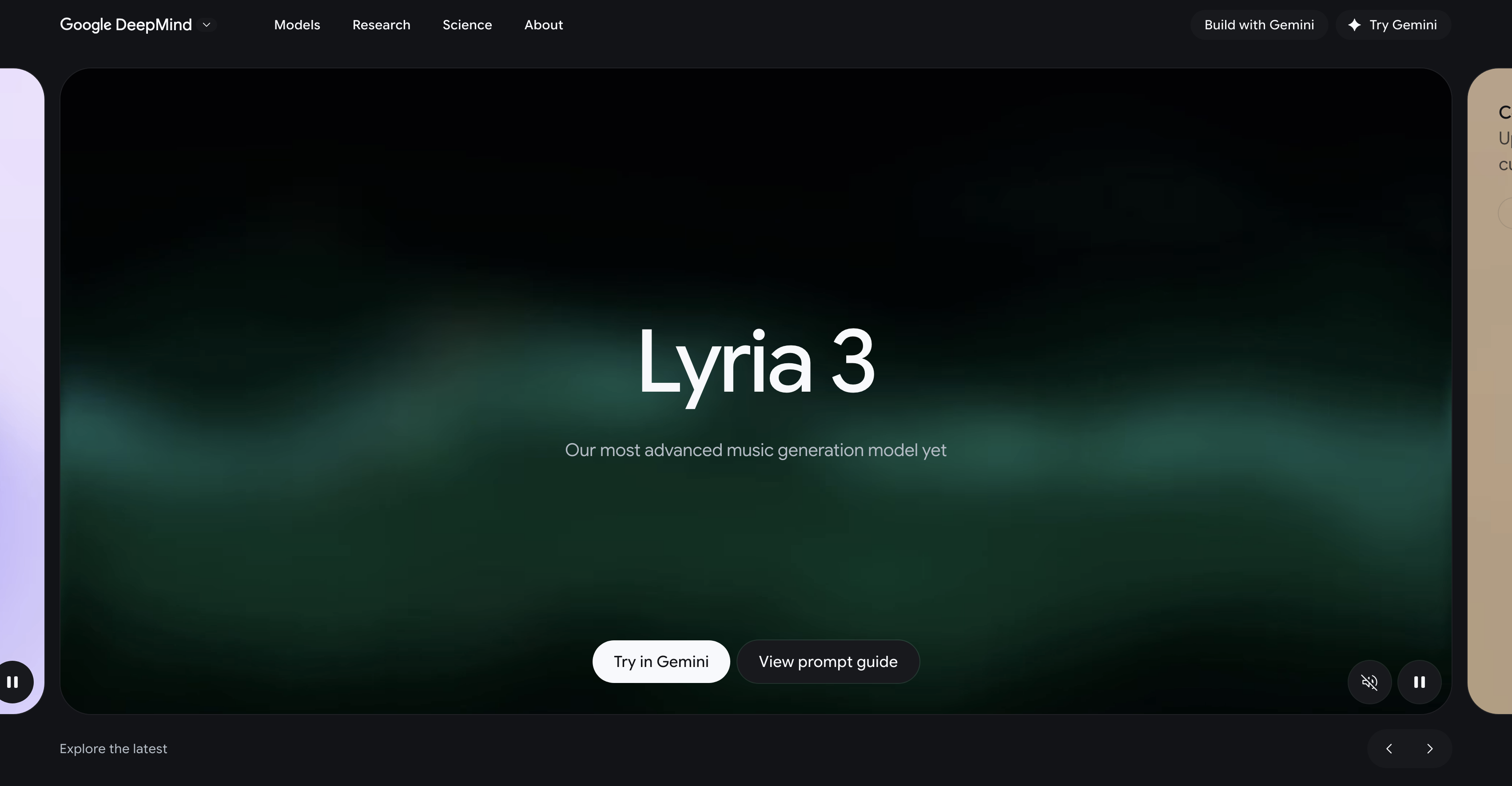
Lyria 3 is a sophisticated AI model developed by Google DeepMind that is designed specifically for music generation. It is a powerful creative platform that allows users to explore, experiment, and produce their desired sound. This model provides the functionality to convert images into custom high-fidelity tracks and affords the ability for broad customization, such as defining realistic vocal styles and acoustic preferences.
Lyria 3 generates music by allowing users to define their desired acoustic preferences and vocal styles. It enables users to experiment and discover their unique sound. Additionally, it offers the impressive ability to transform images into custom high-fidelity music tracks.
The image-to-audio conversion feature of Lyria 3 is a unique function that transforms a user's uploaded image into a custom high-fidelity track. This feature is facilitated by the AI's learning capabilities and sophisticated sound generation algorithms.
In Lyria 3, sound can be customized by defining specific acoustic preferences and vocal styles. The platform allows freedom and technical control over the composition, enabling users to create music that perfectly fits their creative visions.
The output quality of music generated by Lyria 3 is high fidelity, producing crisp and clear tracks. It can cater to a broad range of auditory requirements; from background ambiance to mainstage anthems, making it suitably fit for a variety of projects.
Yes, Lyria 3 can help create unique vocal styles. Through its sophisticated algorithms and user interfaces, it allows for the definition of realistic vocal styles, which means users can customize their sound in detail to perfectly fit their creative vision.
Lyria 3 ensures AI safety as part of Google's mission of responsible AI development. This involves proactive security measures that effectively address evolving threats to AI safety and maintain an environment where the AI-directed functions perform ethically and without harm.
The AI Ethical Use in Lyria 3 refers to the responsible use of AI technology to enhance user creativity without compromising individuality or artistic freedom. It ensures AI safety through proactive security and adheres to measures devised to protect against evolving threats.
Absolutely, Lyria 3 can be used for automatic music composition. The AI model allows users to define their desired vocal styles and acoustic preferences, enabling automatic generation of music in response to user prompts and desires.
Lyria 3 assists in creativity by providing a platform for users to explore and experiment with new ideas. It gives users the ability to customize their sound in depth, including the definition of realistic vocal styles and acoustic preferences, therefore expanding the horizons of their musical creations.
Lyria 3 aids in track production by providing a platform that can convert ideas or images into high-fidelity music. It allows users to define realistic vocal styles and acoustic preferences, thus producing crisp and clear tracks ready for various projects.
Google DeepMind developed Lyria 3 as part of its mission to build AI responsibly to benefit humanity. They conceived Lyria 3 as a highly advanced AI model, designed specifically for music generation and sound customization.
In Lyria 3, acoustic preferences can be defined through the platform's user-interface. This gives users the freedom to tailor the sound according to their musical vision, providing an immersive musical tool for creative expression.
Lyria 3 supports high fidelity audio by producing crisp, clear tracks in response to user preferences. It has been designed to generate high-quality sound regardless of the complexity or simplicity of the desired music.
Lyria 3 contributes to responsible AI development by embodying Google's mission of building AI responsibly for the benefit of humanity. It emphasizes AI safety, taking a proactive stance towards security and protection against evolving threats.
Yes, Lyria 3 can generate a wide variety of music, ranging from background ambience to mainstage anthems. Its high versatility makes it suitably fit to compose music for a variety of contexts.
Yes, Lyria 3 is designed as a user-friendly platform ideal for exploring new music ideas. Powered by advanced AI capabilities, it invites users to experiment with different sounds and creative concepts, opening up an expansive auditory playground.
Yes, Lyria 3 is equipped to produce music that perfectly aligns with your creative vision. The platform allows comprehensive customization, including the ability to define acoustic preferences and realistic vocal styles, enabling users to shape their sound precisely to their desired aesthetic.
Lyria 3 handles evolving threats to AI safety by integrating proactive security measures. This forms part of its commitment to ensure AI safety, following the principles laid out in Google's mission of responsible AI development.
Yes, Lyria 3 enables you to experiment with different sounds and styles. It grants its users a broad scope of creative freedom, from defining acoustic preferences to dictating vocal stylings, providing a versatile, open-ended environment for musical exploration.
Pricing
Pricing model
Pricing
Paid options from
N/A
Related Videos
Create with Lyria 3: Compose with images
Google DeepMind•3.6K views•Feb 18, 2026