

Overview
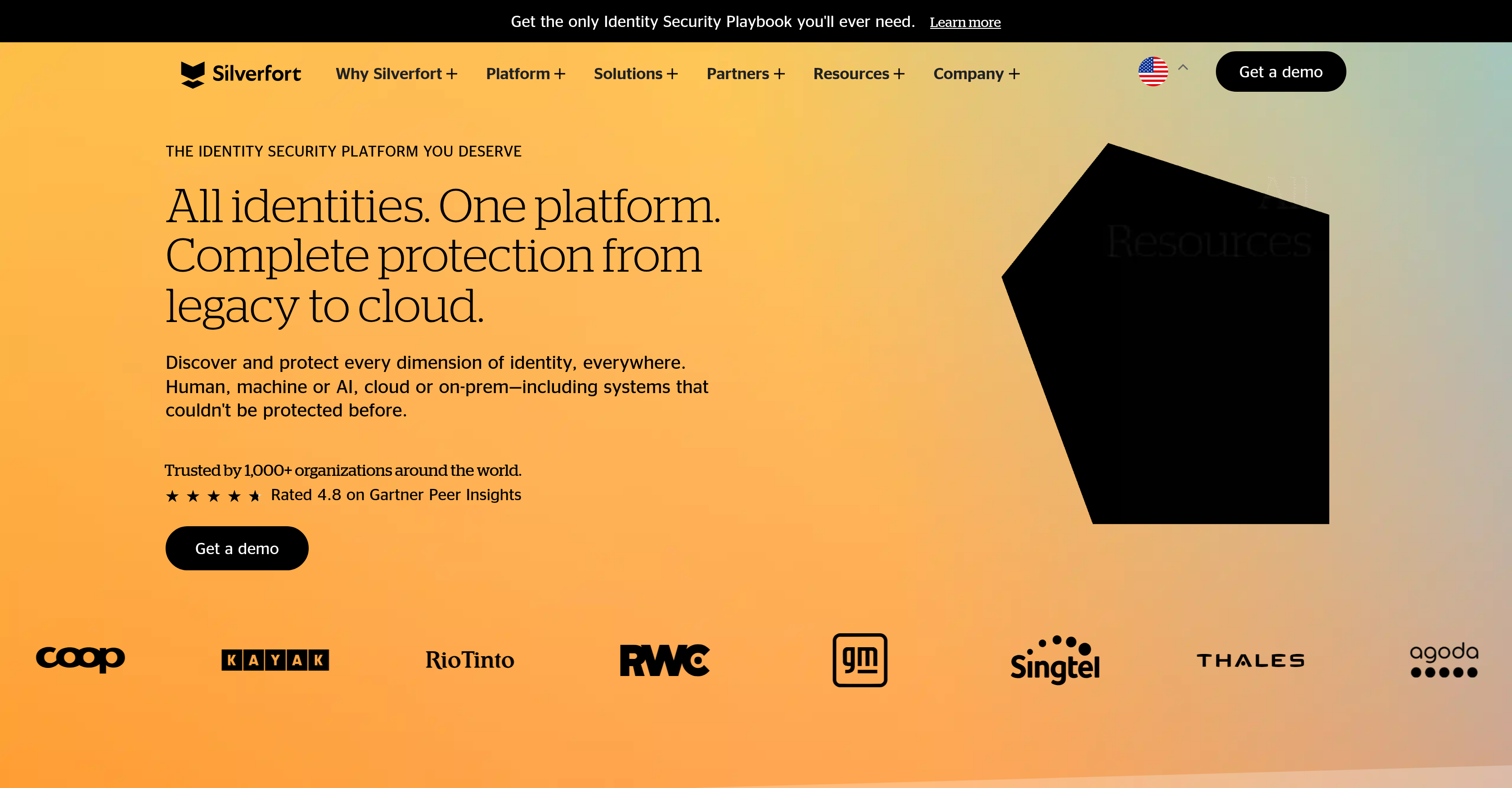
- Stop ransomware and lateral movement by enforcing consistent identity-first policies across every access path, powered by Universal MFA and an Authentication Firewall.
- Secure every unprotected system, including legacy infrastructure, by extending Multi-Factor Authentication to all human, machine, and AI identities in cloud and on-premise environments.
- Eliminate identity weaknesses like weak passwords and excessive permissions using Identity Security Posture Management (ISPM) to find, fix, and fortify vulnerabilities across your entire environment.
- Gain complete control over non-human identities, such as service accounts and machine identities, with NHI Security that brings these hidden risks into full visibility and management.
- Map every identity relationship instantly with the Identity Graph, giving you a comprehensive view of how access is structured to pinpoint and remediate potential weak spots.
- Make faster, smarter access decisions using Access Intelligence, which delivers actionable context on user rights and behaviors for more effective risk management.
- Protect AI agents and AI-based identities from abuse with dedicated AI Agent Security features that monitor and secure these emerging identity types.
- Maintain real-time visibility into who has access to what across your organization, ensuring user access stays policy-compliant and secure at all times.
- Respond to incidents with an identity-first approach, using real-time access protection and intelligent response mechanisms that prioritize identity data to minimize security impact.
Pros & Cons
Pros
- Covers identity dimensions
- Cloud and on-premise functionality
- Shields previously unprotected systems
- Universal MFA feature
- Authentication Firewall boosts resilience
- NHI Security for non-human identities
- Controls privileged access
- Identifies and strengthens weaknesses
- Identity Graph tracks identity relationships
- Access Intelligence for contextual understanding
- Identity-first incident response
- Ransomware Protection
- Lateral Movement Protection
- Enhanced user access visibility
- Caters to various industries
- Identity security for manufacturing, education, healthcare, finance, retail, telecoms
- Real-time inline controls
- Protects systems no other solution covers
- Zero changes for systems and workflows
- Discover and analyze all identities
- Enforce consistent policies
- Legacy system compatibility
- Scales with business
Cons
- Lacks API integration
- No Mobile Application
- Not Open Source
- Closed ecosystem
- Overly Complex Interface
- Broad feature scope
- Non-transparent pricing model
- Limited third-party tool integration
- Potential overreach in governance
- Limited customization options
Reviews
Rate this tool
Loading reviews...
❓ Frequently Asked Questions
Silverfort Identity Security Platform is a comprehensive solution designed to secure every aspect of identity across varying environments. It has the capacity to handle identities associated with humans, machines, or AI, regardless of whether they're based in the cloud or on-premise. This platform is designed to offer protection for systems that may have previously been unprotected. It includes features such as a 'Universal MFA', 'Authentication Firewall', and 'NHI Security', among others.
The 'Universal MFA' feature offered by Silverfort is designed to push the boundaries of Multi-Factor Authentication (MFA) to safeguard all components of an organization's identity infrastructure. This includes human, machine, and AI identities in both cloud and on-premise settings.
The 'Authentication Firewall' in Silverfort is a feature built to boost overall system resilience. It forms a protective barrier, regulating access to sensitive data and systems, which increases the overall resilience of the system.
'NHI Security' in Silverfort refers to Non-Human Identity Security, designed to bring non-human identities under control. Non-human identities include application accounts, service accounts, and machine identities - Silverfort ensures these identities are visible and controlled.
The 'Identity Graph' feature offered by Silverfort is a tool for overseeing all identity relationships within an organization's environment. It provides a comprehensive view of identity relationships, crucial for understanding how access is structured and to pinpoint potential weak spots.
The 'Access Intelligence' system in Silverfort provides actionable context of access rights. It generates comprehensive insights into access rights and behaviors which enables more effective control and risk management.
Silverfort protects against ransomware and lateral movements by enforcing consistent policies and protecting every access path. The platform emphasizes an identity-first approach to such incidents, ensuring that all identity dimensions are secured including human, machine, or AI identities.
Silverfort Identity Security Platform caters to a wide range of industries including manufacturing, education, healthcare, finance, retail, and telecommunications.
AI Agent Security feature in Silverfort is designed to monitor and protect AI agents. This feature focuses on identifying and securing AI-based identities, crucial in the context of an increasingly AI-driven digital landscape.
Silverfort provides visibility and control over privileged access by implementing a robust Privileged Access Management system. This system allows for the identification, monitoring, and control of all privileged accesses, which enables organizations to mitigate risks associated with these accesses.
Silverfort identifies and strengthens identity weaknesses through its ISPM (Identity Security Posture Management) feature. ISPM is designed to find, fix, and fortify every identity weakness across all environments.
An identity-first approach to incident response in Silverfort means prioritizing identity security in the event of incidents. This is done through realtime access protection and intelligent response mechanisms which emphasises protecting identity data first, thus reducing the potential impact of any security incident.
Silverfort enhances the visibility and security of user access by providing comprehensive insight into user activities. It gives organizations a clear, real-time understanding of who has access to what, boosting overall visibility and helping ensure that accesses are secure and policy-compliant.
Yes, Silverfort is capable of handling AI identities. It has a provision for AI Agent Security features that monitor and protect AI agents.
Yes, Silverfort's protection extends to cover both cloud-based and on-premise identities. Irrespective of the location, Silverfort ensures comprehensive identity protection.
Silverfort brings non-human identities under control through its 'NHI Security' feature. This feature ensures visibility, control, and security for non-human identities such as machine identities, service accounts, and application accounts.
An identity-first approach to incident response in Silverfort implies that the focus during any security incident is primarily on the identities involved. Using this approach, the platform ensures an immediate and effective reaction to incidents with a keen emphasis on securing identity data.
Yes, Silverfort does have features focused on user access visibility. It offers comprehensive insights into user access activities, enabling clear real-time understanding of who has access to what, alongside enhancing the overall security of these accesses.
Silverfort identifies and strengthens a wide range of identity weaknesses. This includes, but is not limited to, weak or repetitive passwords, excessive permissions, dormant accounts, and other identity-related vulnerabilities that could pose a security threat.
Silverfort increases system resilience through its 'Authentication Firewall' and 'Universal MFA' features. By creating a robust protective barrier and pushing the boundaries of Multi-Factor Authentication, Silverfort strengthens overall system security and resilience.
Pricing
Pricing model
No Pricing
Related Videos
Introducing Unified Identity Protection - Silverfort.com
Silverfort•344.2K views•Feb 3, 2021