

Overview
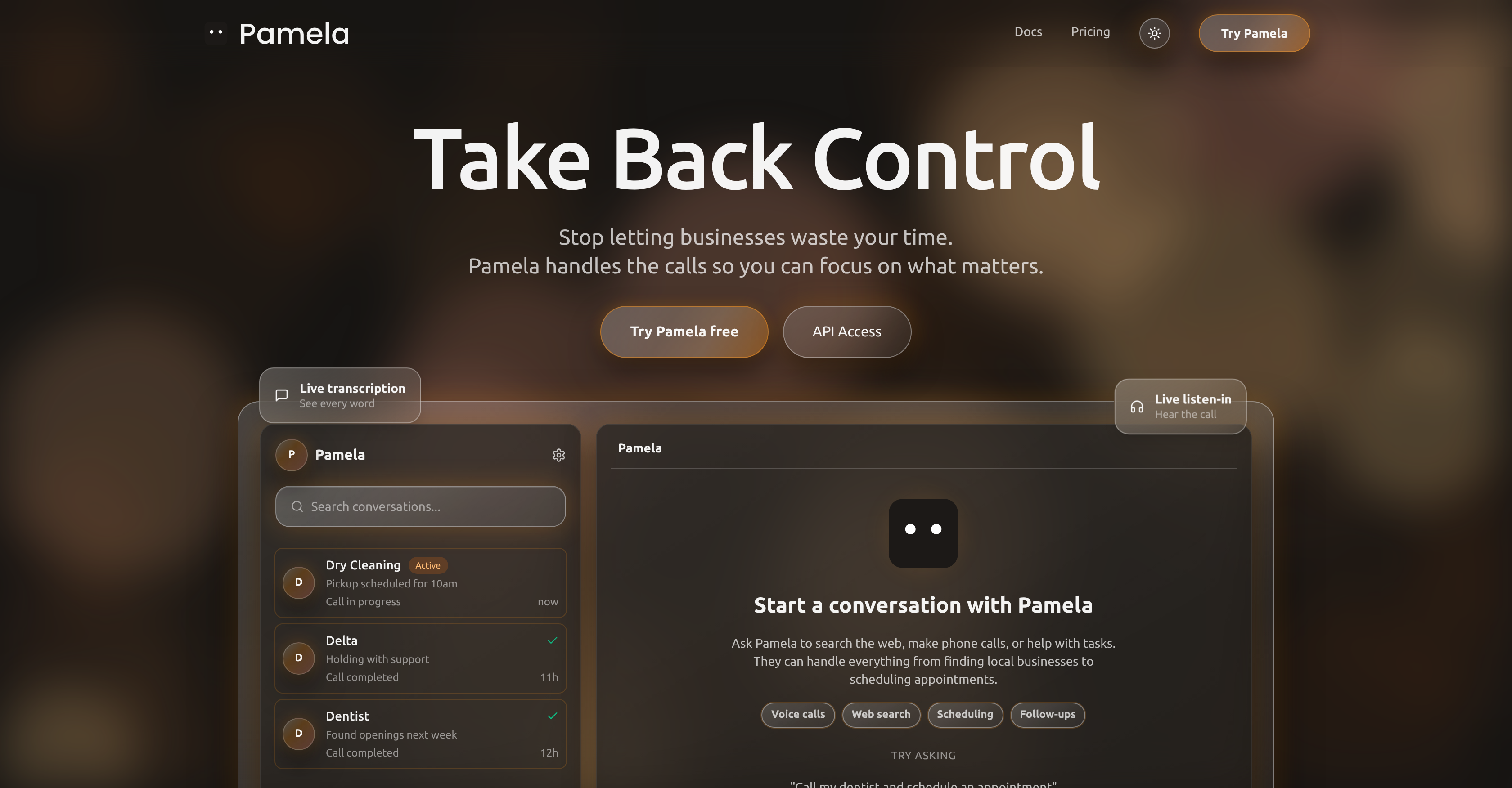
- Eliminate wasted time by seeing exactly where your hours go, using AI-powered time allocation analysis that highlights inefficiencies.
- Execute tasks on time with a personalized reminder and alert system that adapts to your unique schedule and preferences.
- Build better work-life balance by tracking both professional tasks and personal engagements to ensure neither is overlooked.
- Optimize your daily schedule automatically as the AI learns your patterns and suggests more efficient time management strategies.
- Coordinate multiple schedules effortlessly, whether for individual planning or team coordination, with adaptable AI support.
- Gain actionable insights without technical expertise through a user-friendly interface designed for immediate, intuitive navigation.
Pros & Cons
Pros
- Activity tracking
- Time allocation analysis
- Personalized reminders/alerts
- Pattern recognition
- Time usage insights
- Supports work-life balance
- User-friendly interface
- Task automation
- Doesn't require technical expertise
- Integrated system capability
- Data interpretation
- Multi-schedule coordination
- Personalized suggestions
- Schedule optimization
- Wasted time reduction
- Behavioral learning
- Individual/business usage
- Adaptable to diverse needs
- Personal productivity enhancement
- Operational efficiency improvement
- Designed for usability
- Navigational ease
- Offers control over time
- Can be integrated in existing systems
- Habit adaptation
- Efficiency maximization
- Habit Insights
- Business efficiency tools
- Planning tool
- Productivity enhancement
- Convenience and usability
- Supports multiple schedules
Cons
- No offline capability
- Requires habitual user interaction
- Not suitable for technophobes
- Possibly intrusive reminder alerts
- Excessive data interpretation dependency
- Over-reliance on user adaptability
- No mention of security features
- No specified multi-language support
- No integration with external calendars
- Might oversimplify complex tasks
Reviews
Rate this tool
Loading reviews...
❓ Frequently Asked Questions
Pamela is an AI-powered tool designed for assisting users in time management with an emphasis on enhancing productivity.
Pamela enhances productivity by offering functionalities that provide a better understanding of how one's time is spent. This ultimately guides more intentional, efficient planning and task execution.
Pamela's primary features are activity tracking, time allocation analysis, and the ability to set reminders or alerts based on personalized schedules and preferences.
Yes, Pamela can be utilized by teams as well as individuals. It provides an accessible platform for all users seeking to optimize their time management.
Pamela is not strictly for professional usage. It can also manage and track personal engagements and activities that occupy a user's time.
Pamela assists in task execution by providing an activity tracking feature that logs tasks, and a reminders feature that ensures important tasks are not overlooked.
Pamela's AI-powered activity tracking involves logging work-related tasks and personal engagements. The AI then analyzes this data, highlighting patterns and offering insights into more effective utilization of time.
In the context of Pamela, time allocation analysis is a feature that shows the distribution of time across various activities, helping users identify areas where time might be inadvertently wasted.
Yes, Pamela can set up reminders and alerts based on personalized schedules and preferences.
Yes, the reminders and alerts set by Pamela are customizable to fit individual schedules and preferences.
Pamela's AI identifies patterns related to how a user's time is spent. It highlights these patterns to provide insights into more effective time management.
Yes, Pamela can detect wasted time. Its time allocation analysis feature aids users in identifying areas where time might be inadvertently wasted.
Yes, Pamela can support work-life balance. It serves as a catalyst for more balanced and productive days by helping manage personal engagements alongside work-related tasks.
Pamela helps users understand how their time is spent through its activity tracking and time allocation analysis features. These deliver insights into how time is distributed across different activities.
Yes, Pamela can assist in planning an intentional work day. Its reminder and alert system supports intentionality in how time is spent.
Pamela's features, such as AI-powered activity tracking, time allocation analysis, and reminders, all support intentional time management by aiding users in understanding and optimizing how their time is spent.
Yes, Pamela allows you to customize your schedule. It sets up reminders and alerts based on your personalized schedule and preferences.
Pamela aims to improve personal productivity by providing insights into time spent, identifying potentially wasted time, and assisting with more efficient planning and task execution.
Pamela uses AI to analyze tracked activities and time allocation data, highlighting patterns and providing insights on how to utilize time more effectively. Its reminder and alert system personalizes schedules and preferences, ensuring tasks are executed efficiently and timely.
Pamela tracks all activities that occupy a user's time, including work-related tasks and personal engagements.
Time allocation analysis in Pamela shows how time is distributed across various activities. This helps users identify areas of time wastage and reveal opportunities for more effective time management.
Pamela offers reminders or alerts that align with personalized schedules and preferences. It ensures important tasks or engagements are not missed, supporting more intentional time utilization.
Yes, Pamela is suitable for both individuals and teams seeking to optimize their time management, promoting enhanced productivity and work-life balance.
Pamela aids in achieving a work-life balance by providing insights into how time is spent and offering personalized suggestions for efficient time allocation. It's reminder and alert system also ensures that time for personal engagements is preserved.
In the context of Pamela, 'time tracking' refers to the logging and analysis of all activities that a user engages in, with the aim of understanding how one's time is spent.
No, Pamela does not require users to have any technical expertise. It offers a user-friendly interface that allows users to navigate the tool with ease.
Pamela's habit adaptation feature works through its AI's ability to learn from user data. It interprets user routines, identifies patterns, and suggest changes that could lead to improved time management.
Pamela can be integrated within existing systems by providing complementary support for time management strategies. Exact details of integration would depend on the specific system in question.
Pamela offers personalization by analyzing user Activity and behavior, and tailoring its recommendations and alerts to individual preferences and schedules.
Yes, Pamela can assist in planning and optimizing schedules. By analyzing tracked activities and time allocation data, it identifies potential efficiencies and suggests optimal schedules.
Pamela aids in reducing wasted time by analyzing the distribution of time across activities, and highlighting areas of inefficiency. It offers insights and suggestions for more effective time use.
Pamela's AI interprets user data by developing an understanding of their patterns and habits from their tracked activities and time allocation. This information is used to provide personalized suggestions for improved time management.
Yes, Pamela is designed to be easy to use and navigate for someone with low technical knowledge. It provides a user-friendly interface and does not require any technical expertise.
Pamela learns from a user's activities and behaviours by analyzing the tracked activities and time allocation data. It identifies user patterns and preferences, utilizing this knowledge to provide personalized recommendations.
Yes, the efficacy of Pamela does depend on user behaviour. Whilst it provides insights and suggestions for improved time management, the user must be willing to incorporate these into their routines and adapt their habits as recommended.
Yes, Pamela can manage multiple schedules. Its AI capabilities can coordinate multiple time management needs, making it adaptable to diverse requirements.
Yes, businesses can use Pamela to improve operational efficiency. By automating manual planning and scheduling, and providing insights into time allocation, Pamela aids in optimizing productivity.
Pricing
Pricing model
Freemium
Paid options from
$16/month
Billing frequency
Monthly